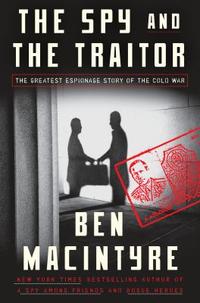
 Oleg Gordievsky was a spy like no other. The product of a KGB family and the best Soviet institutions, the savvy Russian eventually saw the lies and terrors of the regime for what they were, a realization that turned him irretrievably toward the West. His career eventually brought him to the highest post in the KGB’s London station-but throughout that time he was secretly working for MI6, the British intelligence service”-
Category: Activities (Page 33 of 50)
Activities are gatherings that occur on a regular schedule, usually weekly, to enjoy a specific pastime.
Discussion leader: Charlie Goodyear
Summary :
SINGLE PAYER HEALTHCARE SYSTEMS
USA Healthcare System
-17% of GDP (was 7% in 1971) vs. 9% Canada,10% UK, 10% Germany
-Coverage :
+50% Employer (155 million people, cost $20,000/family, employee pays
$5000)
+14% Medicare (+/- 55 million people)
+12% Medicaid, Veterans, Native Americans (+/- 50 million people)
+ 7% ACA purchased (+/- 20 million people)
+ 8% Emergency Room, Other
+ 9% Uninsured (+/- 30 million people)- 80% US citizens
-Drug costs : $1000/per person/year vs. OECD $500
-Estimated 100-130 million people have “pre-exsisting conditions”
-Life expectancy below OECD countries, Infant mortality higher
-Reasons for higher costs vs OECD countries :
+ Technology and drugs ( eg more MRIs per capita, no drug price controls)
+ Obesity (35% vs 19% OECD) and chronic illnesses (32% of Medicare costs
cover the last two years of life)
+ Much higher administrative costs (4% of GDP), double the staffing vs Canada
-Healthcare costs a major factor in personal bankruptsy( !0 million have bills they can’t
pay )
Canada Healthcare System
-Single payer system covering 100% of the population -no co-pays or deductables
-Doctors and hospitals privately owned and managed within system rules
-Managed by Provincial governments who pay all doctor and hospital charges
-System funded 50/50 with Federal government
-Provinces set prices and proceedures that comply with Federal requirements
-No private insurance allowed except for drugs and dental not covered by System
-Heavy involvement in drug pricing and approval, cost benefit analysis
-Essentially no US type media drug advertising
-Doctors earn about 2/3 of what US doctors earn/year
-Lower availability of medical devices (eg. 75% fewer MRIs per capita than US)
-Open heart and transplant surgery restricted
– Major problems: waiting times for referral to specialists (+/- 16 weeks ), doctor
choice limited, long delays for elective surgery
United Kingdom Healthcare System
-Single payer system covering 100% of the population-no co-pays or deductables
-Doctors are government employees and hospitals are government owned
-Managed by major regional authorities (ie Britain, Wales,Scotland, etc)
-Drug prices controlled by the government, strict cost/benefit analysis. No US
type media drug advertising
-Drug prescriptions cost about $12/ each, free for children.
– No dental coverage for adults
– Doctors earn about 2/3 of what US doctors earn
– Individuals may purchase insurance coverage with doctors in private practice
– Major problems: Long wait times (+/- 10 weeks for general surgery), limited availabiliy
of new(expensive) or experimental treatments, cost/benefit analysis, lack of mental
health services, very long delays for elective surgery
-Per capita costs $4K/year vs US $10K/year
-Many say “Underfunded but not broken “
Germany Healthcare System ( An alternative to “single payer” ??)
-An insurance based system with non profit and for profit insurers
-Covers 90% of population- required participation for all but highest earners
-Funded by 50/50 contribution by employers and employees -15% of earnings
up to about $70K/year (2014 data)
-Private doctors and hospitals but highly regulated
-No deductables and low co-pays -children are free
-Managed by regional authorities via “sickness funds” that are used to control
total costs
– Drug prices are controlled, cost/benefit analysis, no US type public advertising
– Doctors earn about 2/3 of US doctors/year
– Per capita costs less than 1/2 of US
– Surveys indicate significantly higher public satisfaction with the system vs US,
Canada or UK
( The relationship between the insurance companies, doctors, hospitals ,employers,
employees individuals and the regional government bodies is unclear and needs
further analysis and understanding)
Comparisons of Health Care Systems in the United States, Germany and Canada
https://theconversation.com/why-market-competition-has-not-brought-down-health-care-costs-78971
https://theconversation.com/medicare-for-all-could-be-cheaper-than-you-think-81883
The article below on drug cost shows how complicated healthcare is to understand, much less manage. Factors such as age of population, availability of new drugs, the number of insured, etc. all interact.
Still, negotiation is an important factor. The article states that many western countries (all government run healthcare) will only pay for improved outcomes.
But it’s not purely rational. If some exotic drug will save your life, it’s worth a lot to you but maybe not so much to society if it starves other healthcare services. The payers are subject to political pressure from interest groups. Not simple.
The False Promise of ‘Medicare for All’
Cost is only part of the problem. Single-payer systems create long waits and delays on new drugs.
Tuesday, October 2, is the first Wandering of the 2018-2019 program year.
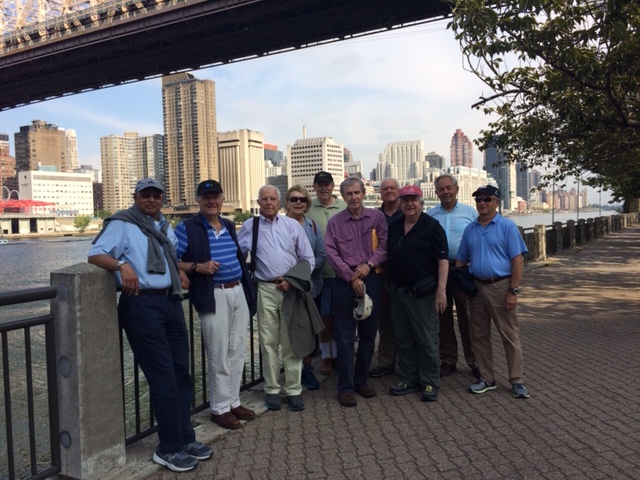
The Wanderers will journey to Roosevelt Island in the East River and to Astoria, Queens.
We will take the 8:35am train out of Darien and the 8:38am out of Noroton Heights. The group will gather in Grand Central Station at the information booth on the upper level.
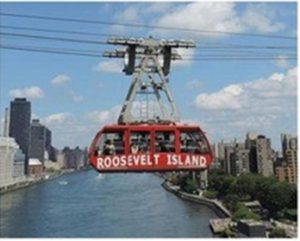
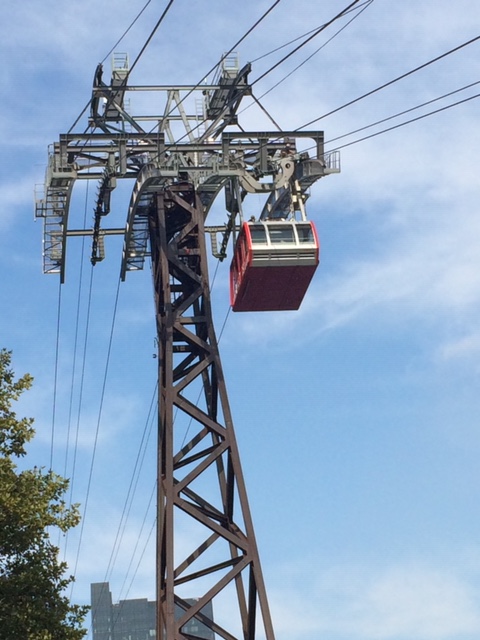
We will take the subway to the 59th Street station for the Roosevelt Island tram, cross to the Island and walk through Four Freedoms Park and the FDR Memorial sculpture display.
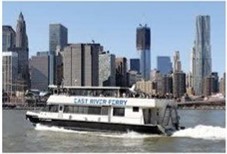 Then, via the East River Ferry, we’ll go to Astoria, Queens. We will walk by many of the local landmarks associated with the earliest days of the motion picture industry in the United States, through Socrates Sculpture Park and several other sights, and finally have lunch.
We will return by subway in the afternoon to Grand Central for the train ride home.
If it rains Tuesday, we will not go. A new date will be announced at our regular weekly meeting the next day,
Contact: Joe Spain
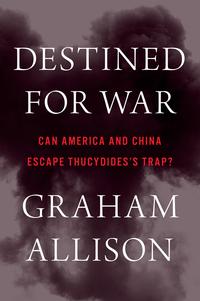 CHINA AND THE UNITED STATES ARE HEADING TOWARD A WAR NEITHER WANTS. The reason is Thucydides’s Trap, a deadly pattern of structural stress that results when a rising power challenges a ruling one. This phenomenon is as old as history itself. About the Peloponnesian War that devastated ancient Greece, the historian Thucydides explained: “It was the rise of Athens and the fear that this instilled in Sparta that made war inevitable.” Over the past 500 years, these conditions have occurred sixteen times. War broke out in twelve of them. Today, as an unstoppable China approaches an immovable America and both Xi Jinping and Donald Trump promise to make their countries “great again,” the seventeenth case looks grim. Unless China is willing to scale back its ambitions or Washington can accept becoming number two in the Pacific, a trade conflict, cyberattack, or accident at sea could soon escalate into all-out war. In Destined for War, the eminent Harvard scholar Graham Allison explains why Thucydides’s Trap is the best lens for understanding U.S.-China relations in the twenty-first century. Through uncanny historical parallels and war scenarios, he shows how close we are to the unthinkable. Yet, stressing that war is not inevitable, Allison also reveals how clashing powers have kept the peace in the past — and what painful steps the United States and China must take to avoid disaster today.
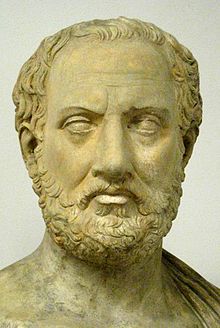 See entry about Thucydides Thucydides
Two pieces shared by Tom Igoe
Graham-Allison-Opinion-in-Weekend-Financial-Times
The-Crisis-in-U.S.-China-Relations-WSJ.pdf
The Truth About the Liberal Order
Dynamic growth of China’s GDP.
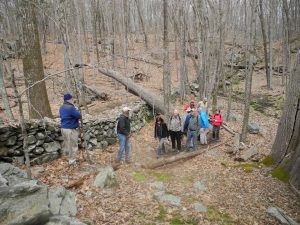
Hiking Zofnass Family Preserve in Pound Ridge on Thursday, Oct 18, 2018 The Zofnass Family Preserve in Pound Ridge is a 150 acre property owned by the Westchester Land Trust. At this time of the year it is a lush green. There are about 8 miles of trails over a rustic terrain. We will be hiking a loop of about 3 miles, which should be completed in about 2-2 ½ hours. This hike is not for beginners. The trail is
quite rugged with several ups and downs. You do need stamina and a sense of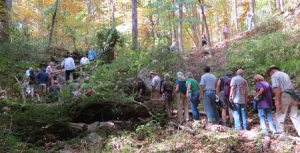 balance. Experienced hikers will find this hike in the rustic wilderness most enjoyable.
Due to limited parking space at the trailhead we will meet at 9.30 am at the Long Ridge Tavern located at 2635 Long Ridge Road, Stamford and car pool from there. Take Exit 34 off the Merritt Parkway and head north on Long Ridge Road for about 3.8 miles till you come to the Tavern on the right ( a red building just before the the blinking traffic light.)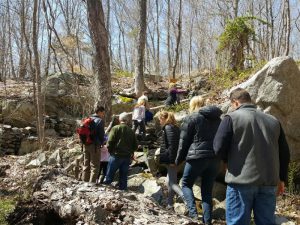
From the Long Ridge Tavern the ride to the trailhead , located at 245 Upper Shad Road is about 5-8 minutes. We expect to start hiking by 9.45 am and finish by about 12.15
pm. Its a beautiful time of the year and the hike should be a rewarding experience.
Lunch will follow at the Long Ridge Tavern for those interested, about 12.30 pm.
We welcome participation from spouses.
Dogs on leash are allowed.
Contact for this hike: Sunil Saksena 203-561-8601 ssaksena44@gmail.com
Picture from this year’s hike.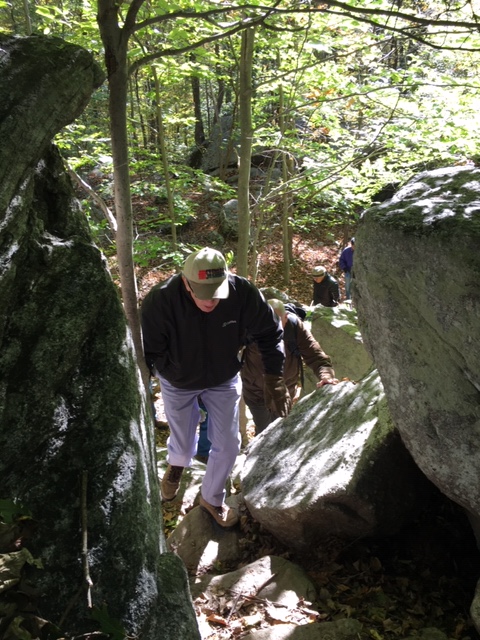
OLYMPUS DIGITAL CAMERA
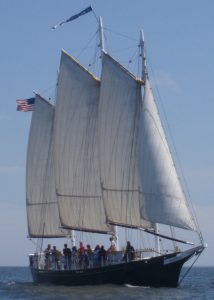
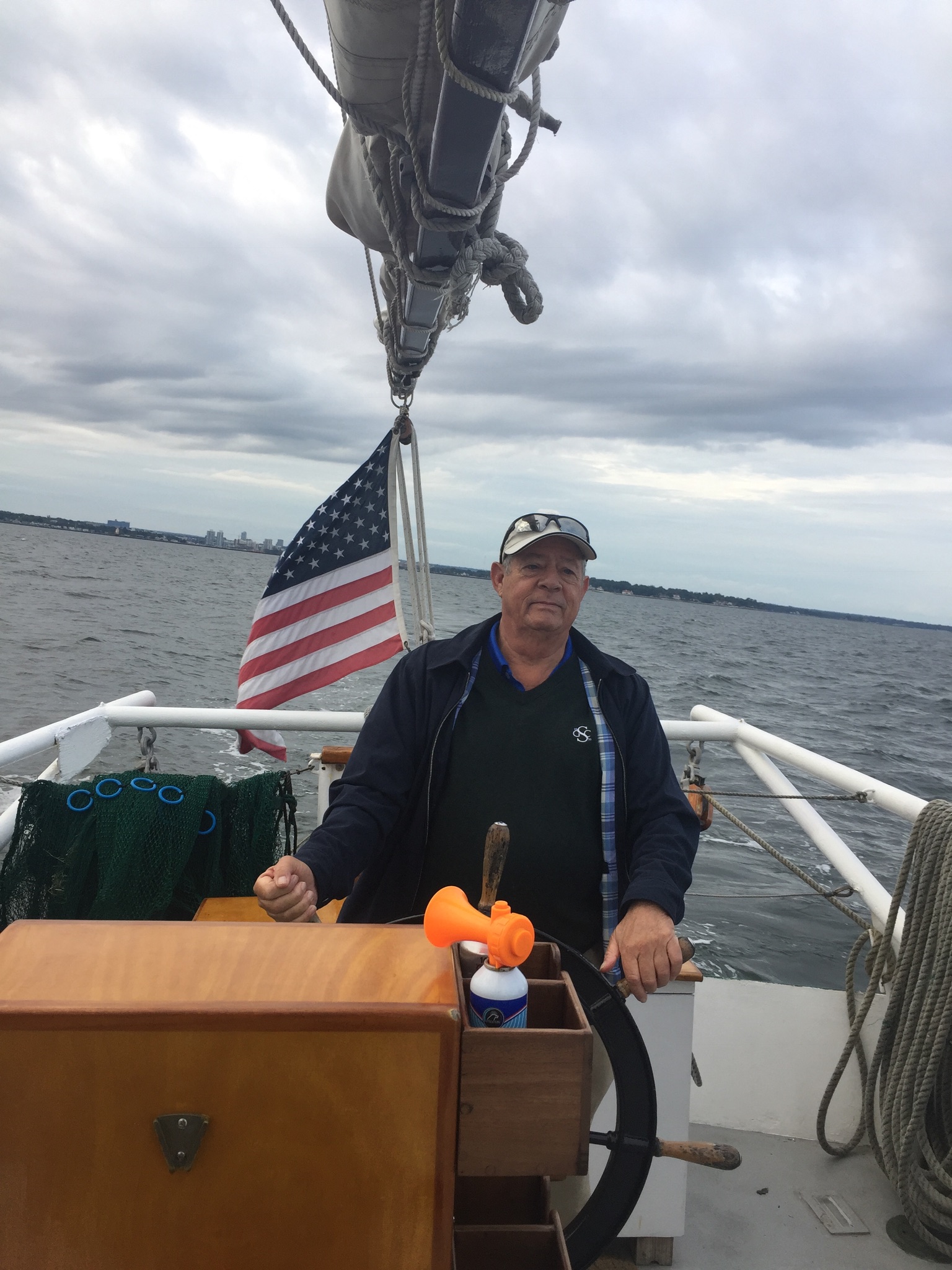
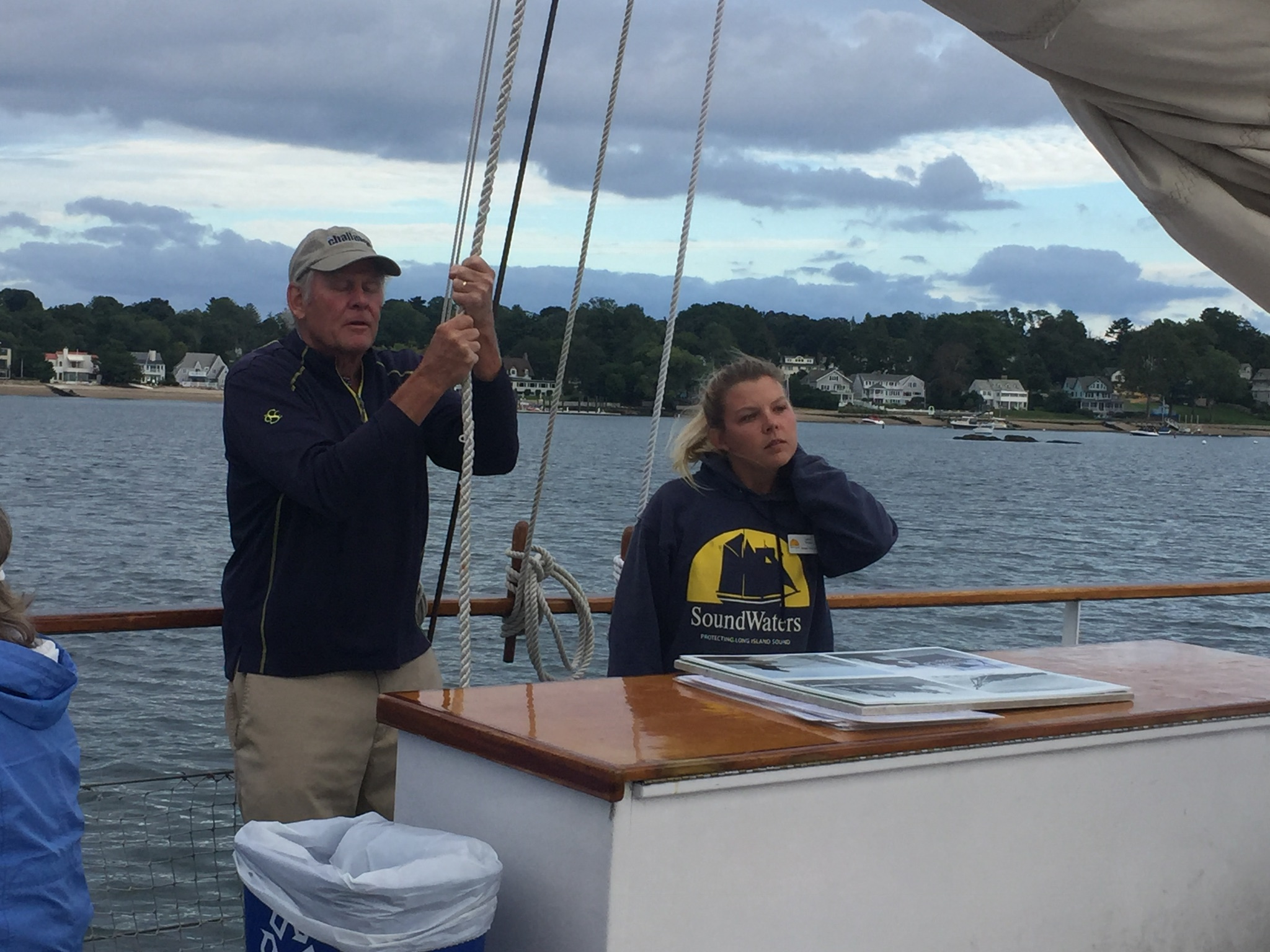
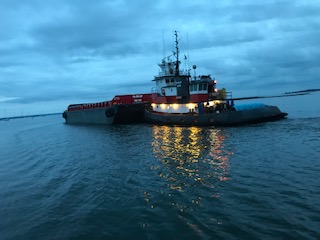
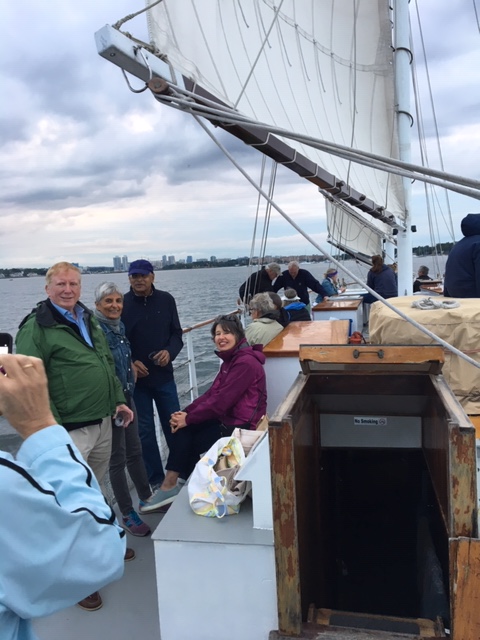
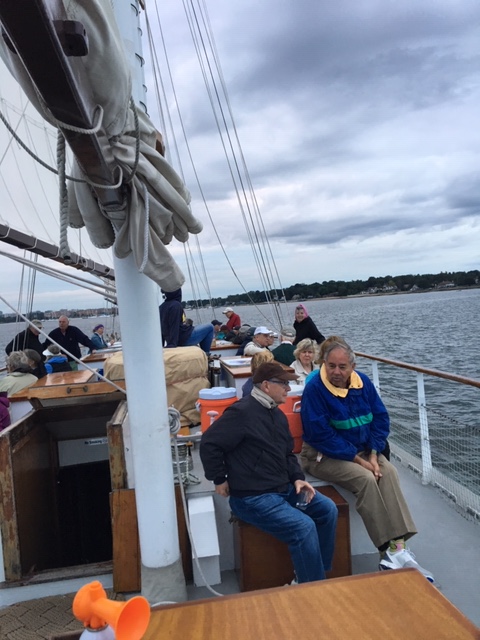
An Evening Sail on Schooner SoundWaters
Chris Snyder, chairman, Social Events, reports that Gary Banks has arranged on evening sail on the schooner SoundWaters on September 27 from 5 p.m.-7 p.m., departing from Stamford. Included is a talk about the “Maritime History of Long Island Sound.”
Cost of the two-hour sail is $10 per person. There is space on board for a maximum of 40 people.
Participants are invited to bring their own snacks or beverages such as beer, wine and soft drinks.
Park in Boccuzzi Park, 200 Southfield Ave. Stamford. It is on the West side of Stamford. There is construction in the area, plus the usual I95 congestion through Stamford, so allow extra time. The boat sails promptly at 5. My GPS took me to Exit 6 then left on West, left on Selleck, and right onto Southfield. A crew member will be at the parking lot to give you a parking permit and escort you to the Soundwaters. It is a short walk. There are port-a-johns at the parking lot they ask you to use vs the on-board head. There are also public restrooms off the boardwalk at the Crab Shell.
Dinner after the sail is available at the Crab Shell or Prime – 46 Southfield Ave., Stamford. You can park at Prime/Crab Shell and walk 15 minutes south (to your right) on a pleasant boardwalk to the SoundWaters.
SoundWaters, founded in 1989, is the premier environmental education organization focused on the protection of Long Island Sound and its watershed.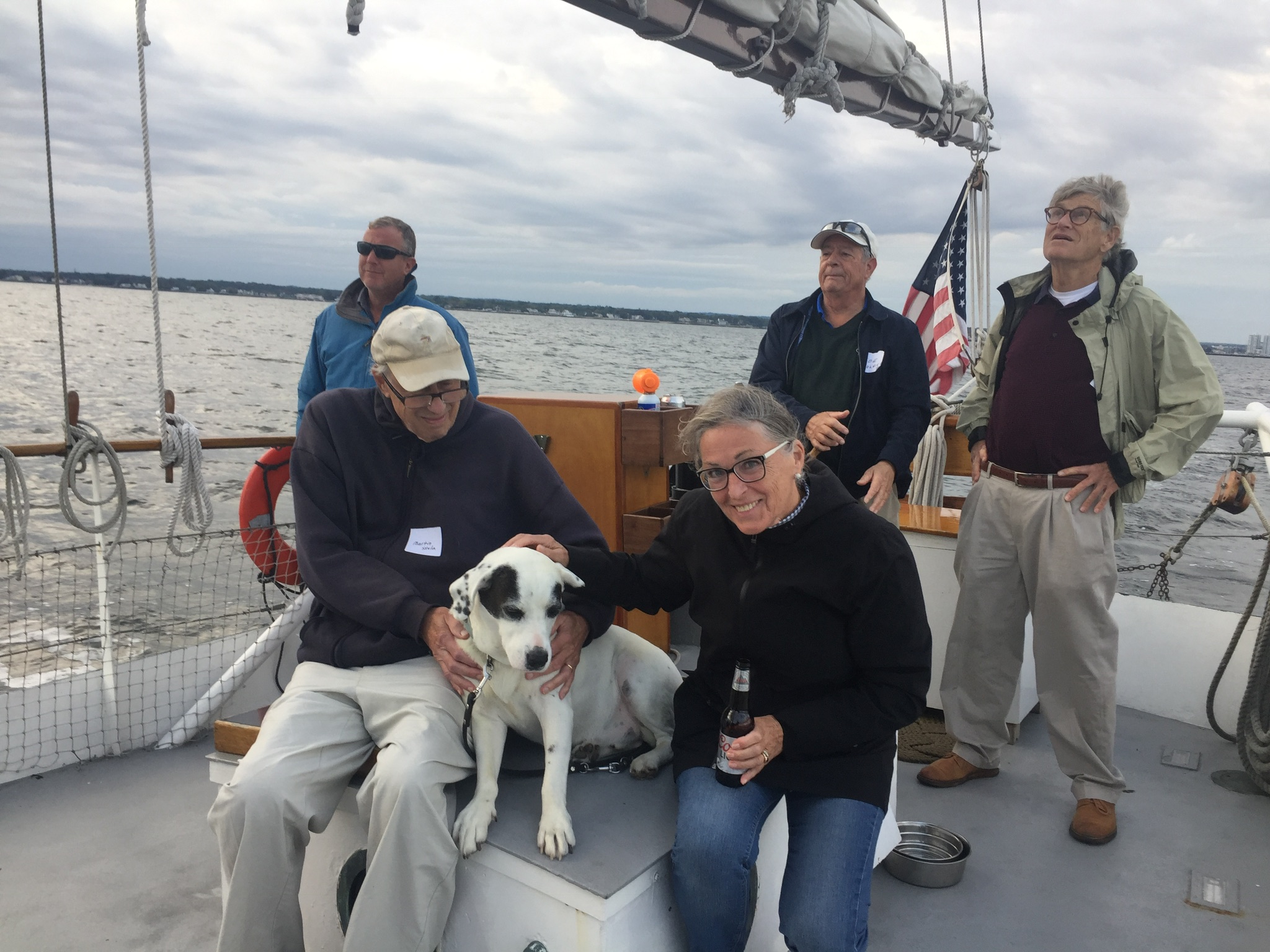
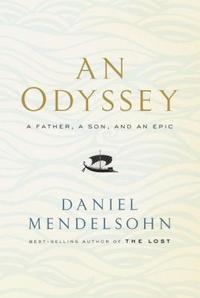 When eighty-one-year-old Jay Mendelsohn decides to enroll in the undergraduate seminar on the Odyssey that his son Daniel teaches at Bard College, the two find themselves on an adventure as profoundly emotional as it is intellectual. For Jay, a retired research scientist who sees the world through a mathematician’s unforgiving eyes, this return to the classroom is his ‘one last chance’ to learn the great literature he’d neglected in his youth–and, even more, a final opportunity to more fully understand his son. But through the sometimes uncomfortable months that follow, as the two men explore Homer’s great work together–first in the classroom, where Jay persistently challenges his son’s interpretations, and then during a surprise-filled Mediterranean journey retracing Odysseus’ legendary voyages-it becomes clear that Daniel has much to learn, too: for Jay’s responses to both the text and the travels gradually uncover long-buried secrets that allow the son to understand his difficult father at last. As this intricately woven memoir builds to its wrenching climax, Mendelsohn’s narrative comes to echo the Odyssey itself, with its timeless themes of deception and recognition, marriage and children, the pleasures of travel and the meaning of home. Rich with literary and emotional insight, An Odyssey is a renowned author-scholar’s most revelatory entwining yet of personal narrative and literary exploration.”
Our second outing this year is at Oak Hills Park, Norwalk, Tuesday, 17 July, starting at 12:30 pm.
Tee times will be assigned once registration is complete.
You are encouraged to arrive ahead of your tee time and enjoy lunch in the Clubhouse Grille.
To sign up, email Peter Carnes, picarnes@gmail.com.
Provide your handicap to facilitate pairing.
Fee is $50 (includes cart).
Confirmation and coordination will be via email during the week prior to play.
For directions to Oak Hills, go to. https://www.oakhillsgc.com/contact/directions-a-map
Discussion leader:Jack Neafsey
Discussion outline:
1-CYCLICAL TEMP/CO2 FLUCTUATIONS OVER THE PAST
MINI ICE AGE FROM 1850 TO 1925
2-SCIENCE- NO HARD SCIENCE-ALL BASED ON MODELS DEVELOPED IN LATE 1980’S–MODELS HAVE BEEN PROVEN TO BE WRONG
3-IMPACT- CO2 IS A FERTILIZER-15% OF CURRENT OUTPUT DUE TO CO2
IMPACT ON THE ECONOMY–COST OF ALT FUELS W/O SUBSIDIES
4- PARIS ACCORD/ KTOTO PROTOCOL- US IS VIRTUALLY ALONE
WORLDWIDE COAL USE IS INCREASING
Global Warming
What we probably agree on by Bob Baker:
Atmospheric CO2 levels are now at the highest of the past million years. This has occurred while CO2 emissions have risen since the start of the industrial revolution.
Current atmospheric level of 410 ppm compares to 280 ppm at start of industrial revolution
For the past 4-5 years CO2 emissions have leveled off at about 100 million tons per day.
This compares with about 60 million tons per day in 1990, when temperatures were rising.
Global temperatures have an erratic yr. to yr. change but have risen since 1950 by about .7 degree C at sea level and about 1 degree C at land surface.
In 1990, the temp. increases were at about their midpoint, such that if CO2 emissions were to drop to the 1990 level, we would not expect any decline in the rate of temperature increase.
The growth in CO2 emissions from fossil fuels has resulted from the consumer choice for consuming these fuels vs alternatives. The added cost for alternatives is not known.
What is at issue is the target in the “Paris Accords” to limit global temperature rise to 2.0 degrees C (but with a preferred target of a 1.5degree rise) in some target year. No agreed level of global emissions has been set; any reduction of atmospheric CO2 will need “CO2 capture and containment” which has not been demonstrated as feasible on a large scale. Lowering CO2 emissions does not lower atmospheric CO2 levels.
Estimated costs for meaningful reductions in fossil fuel use are huge, with the assumption that these will offset future costs of higher world temperatures.
About a billion persons do not have access to a reliable supply of electricity. What is the optimum method/cost for meeting this demand?
Several humanitarian uses for large expenditures can be identified which can yield with near-term results. (Between and one and two million persons die each year: lack of clean water, malaria, HIV and malnutrition).
What is the best use of huge mandated expenditures?
What’s with this wild weather? Blame an ‘extreme’ jet stream pattern.
The Washington Post
“Even veteran meteorologists with decades of experience are astounded,” said Capital Weather Gang’s severe weather expert.
https://www.washingtonpost.com/news/capital-weather-gang/wp/2018/07/25/extreme-jet-stream-pattern-has-spurred-a-week-of-wild-weather-in-u-s/?noredirect=on&utm_term=.36353023b7f0
WSJ – Economics of Climate Change
Major Trump administration climate report says damages are ‘intensifying across the country’ – The Washington Post
Download this PowerPoint
California’s Death Valley Will Have the Hottest Month Ever Recorded on Earth
Gizmodo
July has been one for extreme heat around the world, but every locale pales in comparison to what’s going on at Death Valley in California. Already one of the hottest places on the Earth, the heat has gone into overdrive this July. Death Valley is in line to set a record for the hottest month ever recorded on Earth.
https://earther.gizmodo.com/californias-death-valley-will-have-the-hottest-month-ev-1828001766
Startling new research suggests even faster rate of global warming
The Washington Post
More than 90 percent of global warming ends up in the oceans.
The Climate Won’t Crash the Economy
A worst-case scenario projects annual GDP growth will be slower by 0.05 percentage point. WSJ 11/27/18
Climate Change Is Affordable
A new assessment allows us to think about good policy without panicking.
https://www.wsj.com/articles/climate-change-is-affordable-1543362461?mod=searchresults&page=1&pos=6
You should read this.note the comment that U S emissions are declining and are now 14% versus China’s 27%. China’s are growing rapidly.how does the pact deal with China and India? https://www.nytimes.com/2018/12/05/climate/greenhouse-gas-emissions-2018.html

A paper by Carolyn Holmes Coffey (Joe Holmes’ daughter)
Discussion leaders: David Mace & Charlie Goodyear
Opening summary: Immigration Opening Comments
Migrants Are on the Rise Around the World, and Myths About Them Are Shaping Attitudes – The New York Times
Migrants Around the World
Key facts about U.S. immigration policies and proposed changes | Pew Research Center
http://www.pewresearch.org/fact-tank/2018/02/26/key-facts-about-u-s-immigration-policies-and-proposed-changes/
Companies Say Trump Is Hurting Business by Limiting Legal Immigration – The New York Times
https://www.wola.org/analysis/fact-sheet-united-states-immigration-central-american-asylum-seekers/
https://www.epi.org/publication/immigration-facts/
Discussion leader: Harris Hester
International Trade – It’s complicated
Foreign Affairs. Three Cheers for Trump’s Foreign Policy: What the establishment misses by Randy Schweller
China’s Small Share of an iphone
This is a brief fact check on the relationship between the federal deficit and the trade deficit.
http://www.crfb.org/blogs/did-trade-deficit-cause-20-trillion-debt
This is a more in depth analysis of the same thing.
https://www.cato.org/publications/commentary/us-trade-deficit-not-debt-repay
41-Straight-Years-Of-Trade-Deficits-Yet-America-Still-Stands-Strong
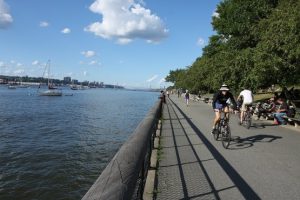 Taylor Strubinger reports that on Tuesday, June 19, the Happy Wanderers will visit the area west of Lincoln Center.
After a short refreshment, we will continue in our effort to walk the entire Hudson River Greenway one section at a time.
This Tuesday, we will walk the Greenway from W. 74th Street to W. 34th Street.
Previously, we walked the Highline portion of the Greenway that runs from W. 34th Street to W. 12th Street.
We will be on the 8:36 a.m. train out of Darien and the 8:39 a.m. from Noroton. We will gather at the Information Booth in Grand Central Station before starting off.
Come join us.