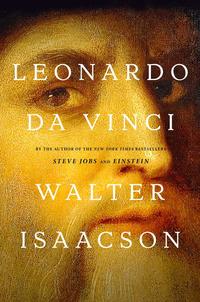
 He was history’s most creative genius. What secrets can he teach us? The author of the acclaimed bestsellers Steve Jobs, Einstein, and Benjamin Franklin brings Leonardo da Vinci to life in this exciting new biography. Based on thousands of pages from Leonardo’s astonishing notebooks and new discoveries about his life and work, Walter Isaacson weaves a narrative that connects his art to his science. He shows how Leonardo’s genius was based on skills we can improve in ourselves, such as passionate curiosity, careful observation, and an imagination so playful that it flirted with fantasy. He produced the two most famous paintings in history, The Last Supper and the Mona Lisa. But in his own mind, he was just as much a man of science and technology. With a passion that sometimes became obsessive, he pursued innovative studies of anatomy, fossils, birds, the heart, flying machines, botany, geology, and weaponry. His ability to stand at the crossroads of the humanities and the sciences, made iconic by his drawing of Vitruvian Man, made him history’s most creative genius.
Category: Activities (Page 32 of 50)
Activities are gatherings that occur on a regular schedule, usually weekly, to enjoy a specific pastime.
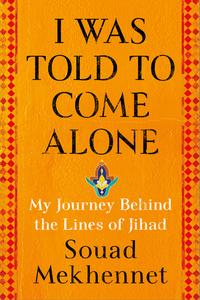 The journalist who broke the “Jihadi John” story draws on her personal experience to bridge the gap between the Muslim world and the West and explain the rise of Islamic radicalism Souad Mekhennet has lived her entire life between worlds. The daughter of a Turkish mother and a Moroccan father, she was born and educated in Germany and has worked for several American newspapers. Since the 9/11 attacks she has reported stories among the most dangerous members of her religion; when she is told to come alone to an interview, she never knows what awaits at her destination. In this compelling and evocative book, Mekhennet seeks to answer the question, “What is in the minds of these young jihadists, and how can we understand and defuse it?” She has unique and exclusive access into the world of jihad and sometimes her reporting has put her life in danger. We accompany her from Germany to the heart of the Muslim world — from the Middle East to North Africa, from Sunni Pakistan to Shia Iran, and the Turkish/ Syrian border region where ISIS is a daily presence. She then returns to Europe, first in London, where she uncovers the identity of the notorious ISIS executioner “Jihadi John,” and then in Paris and Brussels, where terror has come to the heart of Western civilization. Too often we find ourselves unable to see the human stories behind the headlines, and so Mekhennet – with a foot in many different camps – is the ideal guide to take us where no Western reporter can go. Her story is a journey that changes her life and will have a deep impact on us as well
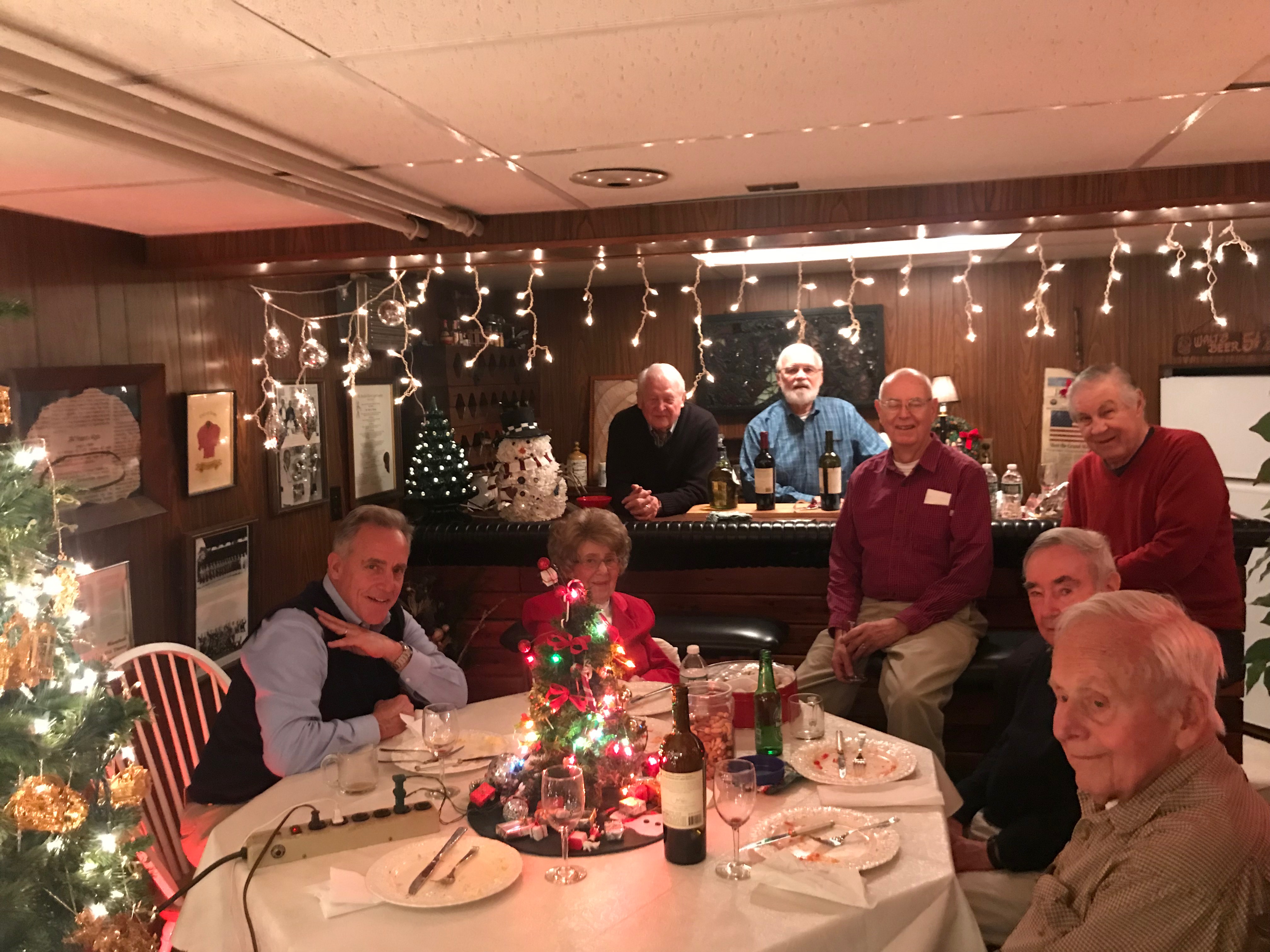
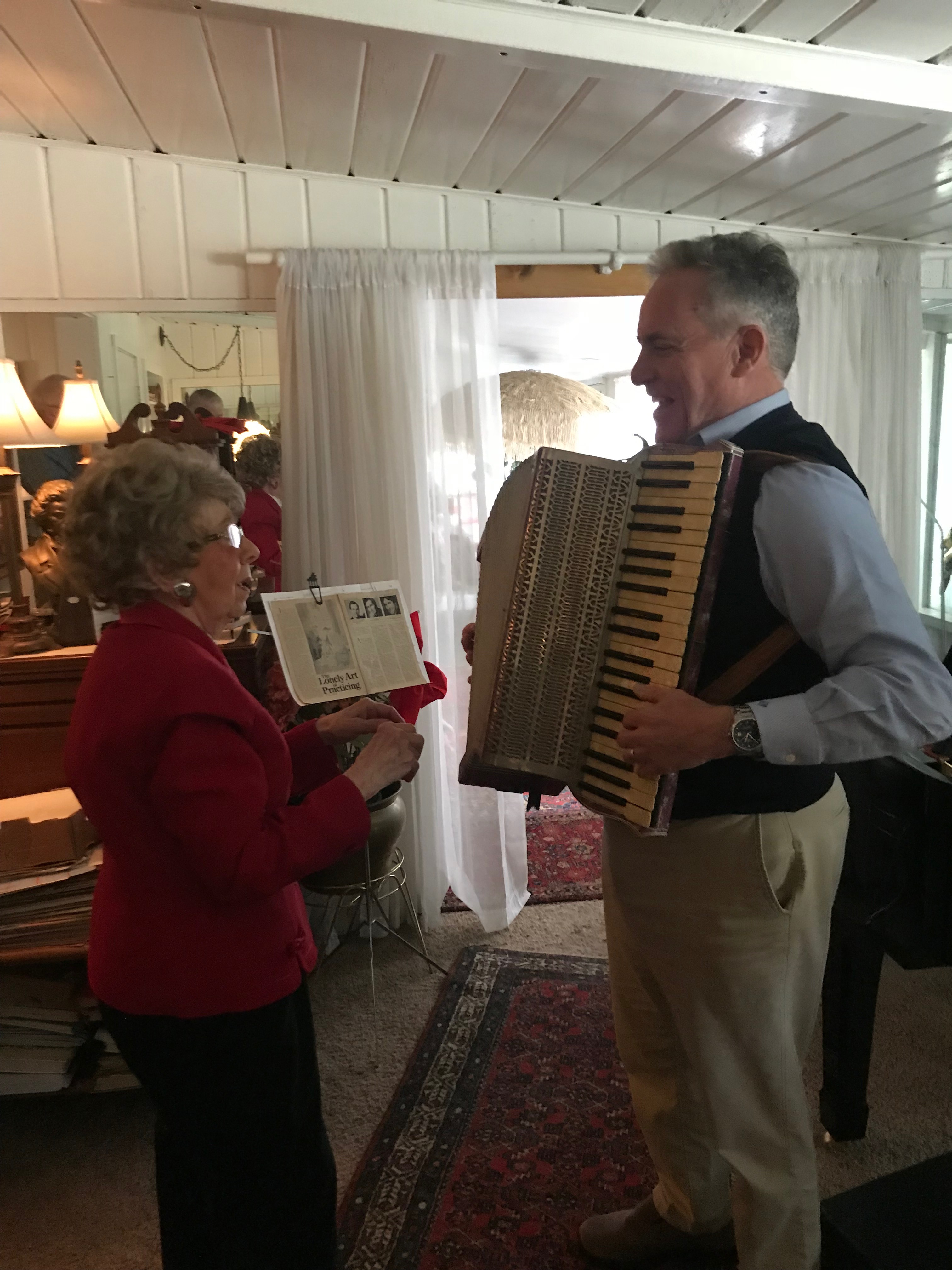
A very merry time was had by all: Bunny, our long-time accompanist, entertained our Gentlemen Songsters singing group at her home in Darien, as she played songs on her magnificent organ, gave accordion lessons to Dave and then provided us with a holiday feast that will live in our memories for a very long time. Great fun! Tom

Happy Wanderers Lower East Side Wandering is on for Tuesday
November 27, 2018
The Wanderers will be exploring the Lower East Side of New York City on
Tuesday, November 27, 2018. Included in this wandering will be libations
at the dive Bar Milano’s, a tour of the Tenement Museum and Lunch at
Katz Delicatessen.Its expected to be a windy and chilly day so be warmly
attired.
Board the 8.36 am train to Grand Central from Darien or the 8.39 am train
from Noroton Heights.Upon arrival at Grand Central, congregate at the
Information booth in the center of its Great Hall.
Contact: Sunil Saksena, 203-561-8601 ssaksena44@gmail.com
HIKING MIANUS RIVER PARK, STAMFORD
THURSDAY, November 8, 2018
10.00 am
 Mianus River Park is a 400 acre urban forest which straddles the towns of Stamford and
Greenwich and is owned jointly by them.At this time of the year the park is at its beautiful best.
While the hiking here is not difficult, the trails are strewn with leaves and roots and occasional
rocks, so you need sturdy shoes and a good sense of balance. We will hike approximately 4
miles and, starting at 10am, be done by about 12.30 pm. As usual, participation from spouses,
significant others and friends is welcome.
The hike will be followed by lunch at the Madonia Restaurant at 1297 Long Ridge Road, Stamford.
Directions
We will be meeting at 10 am at the Stamford entrance of the Mianus River Park which is near 68
Merriebrook Lane, Stamford. Do not go to the Greenwich entrance which is on Cognewagh
Road. Best directions can be had by googling 68 Merriebrook Lane, Stamford. There is a
parking lot on th right just across the street from mailbox for 68 Merriebrook.
Contact: Sunil Saksena
ssaksena44@gmail.com
203-561-8601 cell
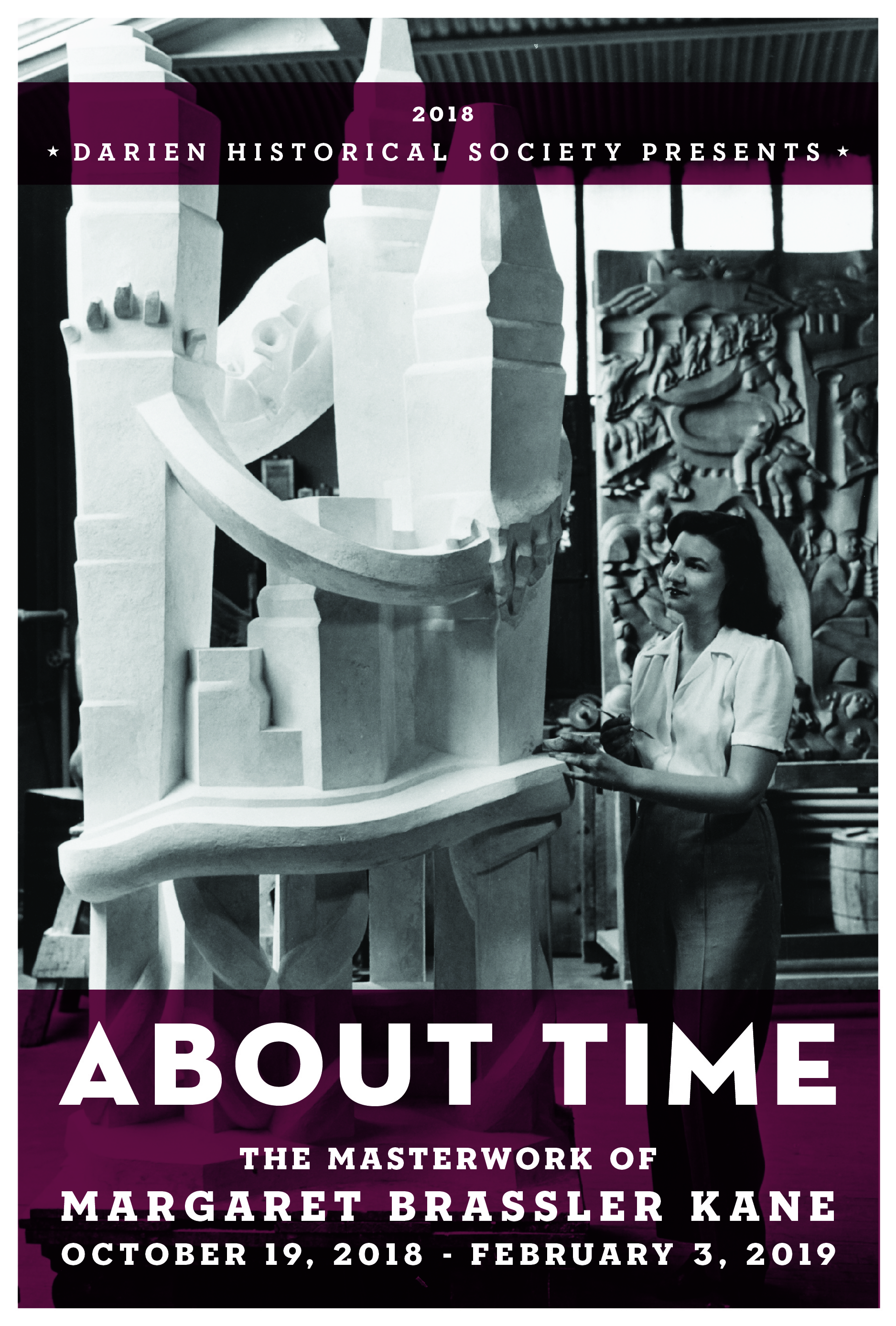
Complimentary Curator Tour of the Society’s latest exhibit, “About Time: The Masterwork of Margaret Brassler Kane (1909-2006),” With Jay Kane, the artist’s son, and Maggie McIntire, DHS director, presenting.
DMA members can attend free, with a guest. They can sign up at our meeting this week or at the meeting on the morning of the Tour: November 7. Any questions, call me. The Darien Historical Society is located at 45 Old Kings Highway North, in Darien.
 |
| Tony Yezzi will again host the annual Christmas Party on Wednesday, December 19, 2018, 5:30 p.m. to 8 p.m., at the Country Club of Darien.
Food service will include one hour of hors d’oeuvres and a sit-down buffet dinner. The menu includes Caesar salad and choice of chicken francaise, grilled salmon or cavatelli bolognese, plus a tasty dessert.
Entertainment is the Darien High School Tudor Singers. Cost is $60 per person with a cash bar.
You can begin signing up at the November 7 meeting.
Contact:
Tony Yezzi
|
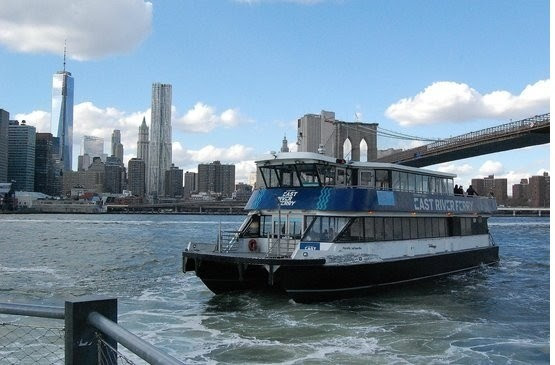 This year saw the re-emergence of water transportation on the East River linking Manhattan to Brooklyn and Queens.
We thought it would be interesting to retrace the history of water ferries by picking one of the more vibrant destinations known as Brooklyn’s DUMBO for Down Under Manhattan Bridge Overpass.
To start out, we will take the train leaving Darien at 8:35 a.m. and Noroton at 8:38 a.m. and gather at the Grand Central Station Information Booth on the upper level.
From there, we will take the Lexington Avenue subway to 34th St. and walk east to the 34th St. ferry terminal to purchase tickets for the East River route, boarding either the 10 a.m. or 10:40 a.m. ferry to DUMBO.
We will then proceed to the Fulton ferry landing and go to the Brooklyn Historical Society Museum to watch an eight-minute film on the history of the area. Our wandering will include a beverage stop and later lunch at the Sugarcane raw bar.
For the return trip, there are ferries at 2:29 p.m. and 2:59 p.m. going back to the 34th St. ferry terminal, where we will retrace our steps to Grand Central in time for the 4:08 p.m. or 4:33 p.m. train home.
Contact: Mark Shakley, cell 203.945.9624, mshakley@aol.com
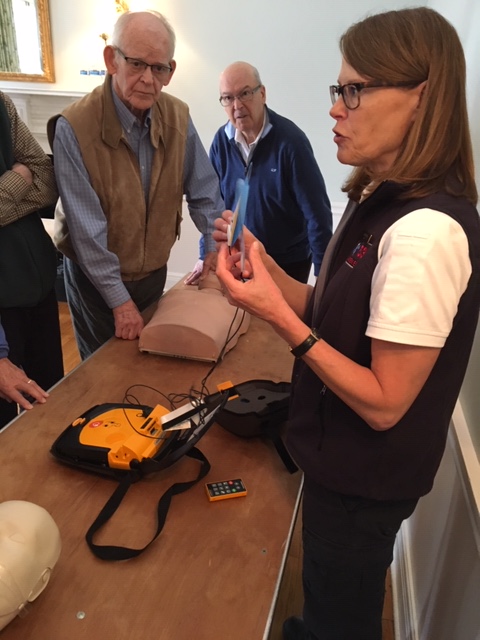
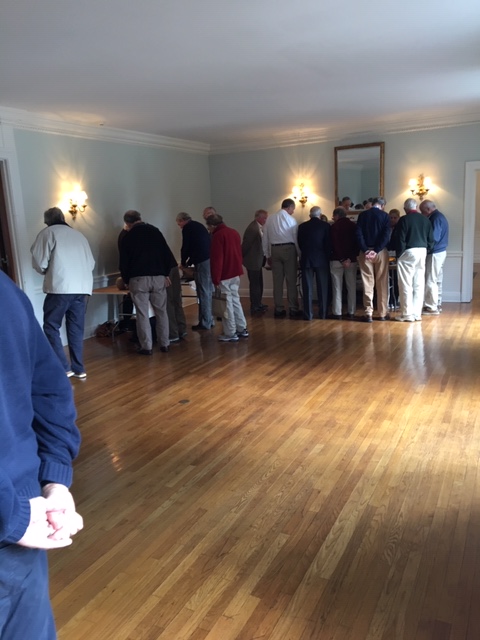
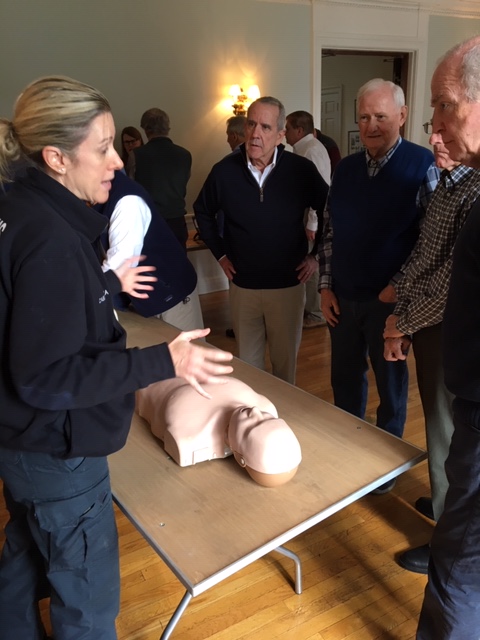
Immediately following Dr. Dhruvakumar’s presentation on atrial fibrillations Post 53 will conduct a CPR training session in the DCA common room.
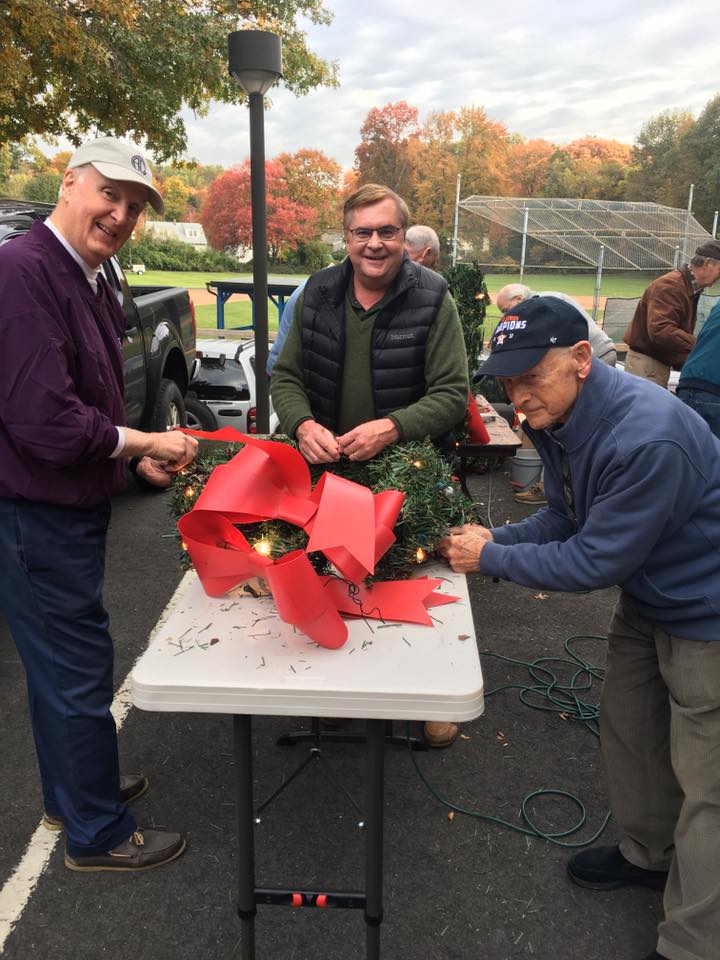
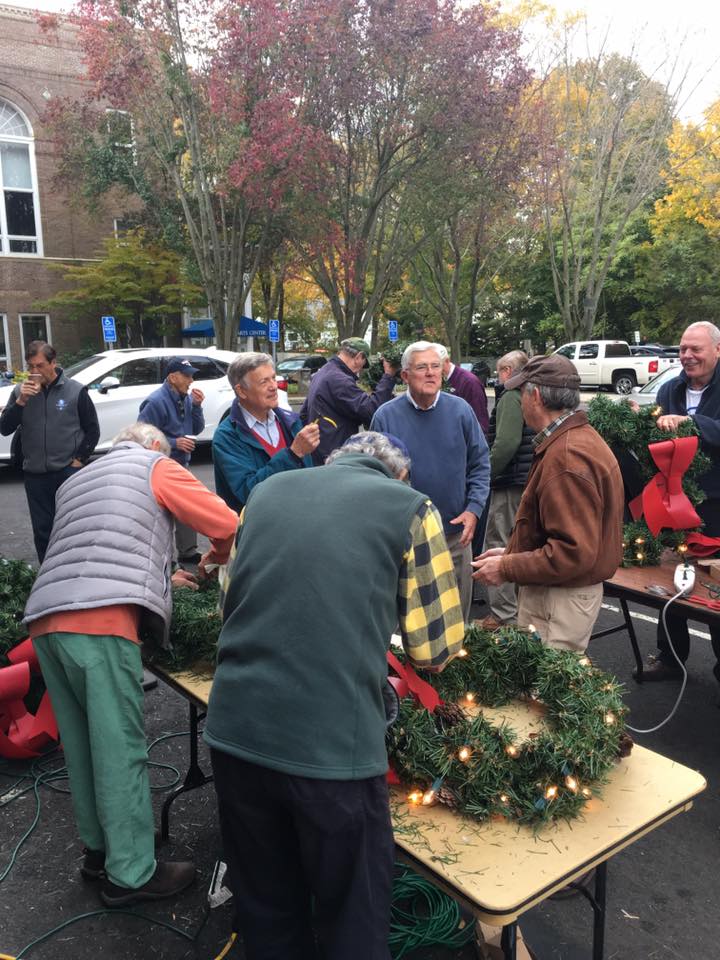
 Thursday November 9th we will be check the lights on the holiday wreaths. We will be meet at 9 AM behind the town hall. Last year we replaced about 195 lights and hope to pass 200 this year. The whole project takes about an hour and a half (the more people who show up the faster the work).
We will have a signup sheet at the Wednesday meetings but all are welcome to attend. They even provide free coffee and donuts.
Good community project and a good time.
Any questions see Jack Fitzgibbons at jpfitz@earthlink.net
We fixed the holiday lights for Darien,
Wreaths from boxes we were a carry’en.
Replacing bulbs, fixing bows, blowing fuses
We did our job with no excuses.
So remember well the seven elves of DMA,
Working in the cold that November day,
We ask no praise, we did our task
But next year we might bring a flask!

 Leave by 10:00
Lunch at 12:00
Show at 2:00
Home by 6:30.
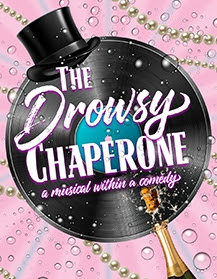
In this hilarious valentine to show tunes and show people, a forgotten Jazz Age musical comes to life in the living room of a diehard theatre fan. As he eagerly spins his favorite cast album, a fizzy vintage show suddenly appears, exploding with song, dance and pure entertainment. Our quirky narrator fills the plot holes, with laugh-out-loud results. Packed with show-stopping numbers and larger-than-life characters, here’s a Tony Award-winning spoof that will have everyone falling in love with zany musical comedy!
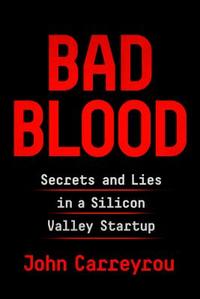 The full inside story of the breathtaking rise and shocking collapse of Theranos–the Enron of Silicon Valley–by the prize-winning journalist who first broke the story and pursued it to the end in the face of pressure and threats from the CEO and her lawyers. In 2014, Theranos founder and CEO Elizabeth Holmes was widely seen as the female Steve Jobs: a brilliant Stanford dropout whose startup “unicorn” promised to revolutionize the medical industry with a machine that would make blood tests significantly faster and easier. Backed by investors such as Larry Ellison and Tim Draper, Theranos sold shares in an early fundraising round that valued the company at $9 billion, putting Holmes’s worth at an estimated $4.7 billion. There was just one problem: the technology didn’t work. For years, Holmes had been misleading investors, FDA officials, and her own employees. When Carreyrou, working at the Wall Street Journal, got a tip from a former Theranos employee and started asking questions, both Carreyrou and the Journal were threatened with lawsuits. Undaunted, the newspaper ran the first of dozens of Theranos articles in late 2015. By early 2017, the company’s value was zero and Holmes faced potential legal action from the government and her investors. Here is the riveting story of the biggest corporate fraud since Enron, a disturbing cautionary tale set amid the bold promises and gold-rush frenzy of Silicon Valley