Even while veterans are often welcomed home from combat tours as heroes, they also may encounter long term neglect in health care, disorientation and PTSD, and even homelessness. This presentation will address these challenges, their scale, their conditions, and programs that seek to address them.
Brigadier General, (Ret.), USA, Ronald P. “Ron” Welch is the Connecticut Commissioner of the state’s Department of Veterans Affairs. Ron enlisted in the U.S. Army on April 22, 1978, and served on active duty with the 2 Ranger Battalion of the 75 Ranger Regiment at Fort Lewis Washington. During his active-duty service, he attained the rank of sergeant and completed Basic Airborne School, Ranger School, Jungle Warfare Course, USMC Amphibious Recon Scout Swimmer Course, Jumpmaster Course, Primary Non-Commission Officer Course, USMC Scout Sniper Course, Emergency Medical Technician Course, Special Operations and Tactics Course, and the Pathfinder School. On May 4, 1981, he sustained serious injuries during a line of duty parachute accident. He left active service after completing his tour of duty on October 2, 1982.
He returned home and joined the Connecticut National Guard and eventually attended Officer Candidate School and on August 11, 1984, he was commissioned as a second lieutenant in the infantry. He then served full-time in numerous positions in the Connecticut National Guard’s Infantry units as a rifle platoon leader, company commander, and various staff positions. He was promoted to Colonel on October 1, 2004, and deployed to Afghanistan in support of Operation Enduring Freedom from 2005 to 2006 as a senior American advisor to an Afghan National Army, Infantry Brigade located in Eastern Afghanistan, providing training, advice, and conducting combat operations.
He retired from military service in 2017. Following his retirement, General Welch sought opportunities to provide support for veterans and active-duty service members and families, and he accepted a position as Vice President of Military and Family Services for Veterans Rally Point with Easterseals Capital Region and Eastern Connecticut, a nonprofit organization that provides expanded access to healthcare, education, and employment opportunities for those with disabilities and the veteran population.
Brigadier General Welch is a graduate of Eastern Connecticut State University, where he earned a Bachelor of Arts degree in 1992 and a Master of Science degree in organizational management in 2007. He also earned a Master of Strategic Studies in 2011 from the U.S. Army War College.
He resides in southeastern Connecticut. His oldest son Stephen is a combat veteran with three tours. He is a full-time Physician Assistant for the CT National Guard, previously serving in the ED at Yale, a daughter Katherine is attending Quinnipiac University in the Occupational Therapy master’s program. And his youngest son Ethan is entering his senior year at Pennsylvania State University majoring in Public Health.
Summary
Brigadier General (Ret.) Ron Welch, Commissioner of the Connecticut Department of Veterans Affairs, provided a thoughtful and comprehensivel presentation in Darien, outlining the state’s history, current initiatives, and pressing needs in caring for its veterans.
Welch opened by highlighting Connecticut’s unique role in veterans’ history, noting that the nation’s first veterans’ home and hospital were founded in Darien in 1864 by philanthropist Benjamin Fitch. That legacy lives on today in the Shady Grove cemetary in Darien (the first veterans cemetary in our history) and the Connecticut Veterans Home now in Rocky Hill—a 92-acre campus with 40 buildings, 1.5 miles of tunnels, and a five-star rated healthcare facility. The Rocky Hill campus also includes dormitory housing and family homes for women veterans and their children.
A decorated veteran himself, Welch served with the 75th Ranger Regiment and later as a senior American advisor to the Afghan National Army. After retiring, he led efforts at Veterans Rally Point, helping veterans reintegrate through healthcare access, employment training, and education. His personal connection to public service is reflected in his children’s careers—his son is a flight surgeon with the Connecticut National Guard, his daughter is an occupational therapist, and his youngest is pursuing a Ph.D. in epidemiology.
Welch explained that Connecticut is home to roughly 150,000 veterans, with over 80% over the age of 60. This aging population requires increasing support in healthcare, housing, and advocacy. The DVA’s four core missions include skilled nursing care, residential services, advocacy and assistance, and cemetery and memorial services. The department also supports family housing, with five houses on campus currently occupied by single mothers and their children.
Among the DVA’s top priorities are expanding housing, upgrading electronic medical records, enhancing website accessibility, realigning budgets, and increasing outreach. Welch emphasized the importance of local Municipal Veterans Representatives—trained volunteers who serve as the first point of contact for veterans in their towns, helping them connect to services and benefits.
He also discussed the importance of Connecticut’s certified Veterans Service Officers, who have generated $199 million in direct benefits for veterans. Welch is advocating for more service officers in underserved areas, particularly the northeast and northwest corners of the state.
Cemetery services remain a focus, with Spring Grove Cemetery in Darien long at capacity and a growing need for expanded burial space. While efforts to acquire new land in Middletown were recently blocked, the department is actively seeking alternative sites and already has state bond funding secured for the expansion.
Mental health and suicide prevention were a central theme in Welch’s remarks. Since 9/11, more than 120,000 veterans have died by suicide—double the number of names on the Vietnam Veterans Memorial. Welch emphasized that social isolation, substance abuse, and mental injury are common threads in these tragedies. He urged veterans and their families to reach out for help, referencing the importance of confidential therapy, peer support groups, and strategies such as removing ammunition or using gun locks to reduce impulsive actions. “Suicide is a permanent solution to temporary problems,” he said. And he highlighted the need to distract a troubled veteran for 5-8 seconds when they are considering harming themselves in order to give them time understand the consequences of what they are planning.
Welch shared efforts under the Governors’ Challenge, a national initiative to reduce veteran suicide. He also highlighted new approaches to mental health, including peer meetups and emerging therapies like psychedelic-assisted treatment, which is currently being studied. He stressed the effectiveness of group sessions that blend casual conversation, shared activities, and emotional connection.
While traditional veterans’ organizations such as the VFW and American Legion have seen declining membership, Welch noted that younger veterans are engaging in different ways. Events like Irreverent Warriors hikes and “Hike to Remember” ruck marches offer camaraderie and purpose. These modern gatherings, he said, help veterans reconnect and begin to process their experiences in healthier ways.
In response to an audience question, Welch acknowledged the strong partnership between Connecticut’s state and federal VA systems. He praised the care provided at West Haven and Newington facilities, which are affiliated with Yale and UConn medical programs. Despite national budget uncertainty, he assured attendees that veterans’ healthcare and benefits remain protected.
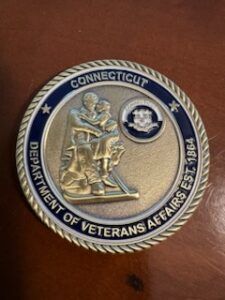 Welch closed by returning to the local history. He spoke about the statue originally placed in Darien, now relocated to Rocky Hill, depicting a Civil War officer comforting a young girl—symbolizing the enduring costs of service and the need to care for veterans and their families.
In presenting a commemorative coin to a local host, Welch thanked the community for its continued support. “We owe our veterans more than words,” he said. “We owe them a life of dignity, opportunity, and care.”
Video Presentation
 Rob Simmelkjaer is CEO of New York Road Runners (NYYR), the non-profit organization that “runs” one of the world’s largest marathons. This enormously successful event will be held this year on November 2nd and has received record-breaking demand with more than 200,000 athletes from 150 countries applying to run. Getting into one of the world’s largest marathons is hard, but more than 50,000 runners – from the world’s best professional and Olympic athletes to a vast range of runners across all experience levels and backgrounds – will compete across all five boroughs in a day that many consider to be The Best Day of the Year in the Best City in the World.
 In announcing Erin’s appointment last August as executive director of the DCA, the board described Erin as a seasoned executive with over 25 years of experience in the development of business and brand strategies, digital and communication plans, and integrated campaigns for some of the world’s most recognized and most well-loved brands. Those brands included Nike, ESPN, American Express and Pepsi. She has brought her vision and experience to bear on revitalizing the DCA for a new era.
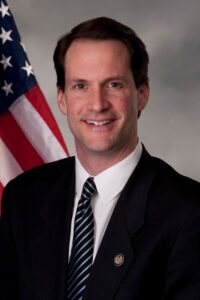 Jim Himes represents Connecticut’s 4th District in the United States House of Representatives where he is serving his eighth term. He serves as Ranking Member of the House Permanent Select Committee on Intelligence, and on the House Financial Services Committee.
 Local author Tim Manners will give a special talk about his book, Schoolboy: The Untold Journey of a Yankees Hero (University of Nebraska Press). Manners, who was a recent guest speaker at the Baseball Hall of Fame in Cooperstown, N.Y., co-authored the book with Waite “Schoolboy” Hoyt, using a trove of records and writings from Hoyt, who passed away in 1984. Hoyt’s improbable baseball journey began when the 1915 New York Giants signed him as a high school junior, for no pay and a five-dollar bonus. After nearly having both his hands amputated and cavorting with men twice his age in the hardscrabble Minor Leagues, he somehow ended up as the best pitcher for the New York Yankees and teammate with such legends as Babe Ruth and Lou Gehrig. You don’t have to be a fan of baseball to be fascinated by Hoyt’s astonishing life story!
 Tim Manners is a writer, communications consultant and baseball fan. A magna cum laude graduate of Tufts University with a BA in history, he is a former FM-radio disc jockey, publicist and magazine publisher. Currently an essay specialist with The Manners Group, he is co-author of “Schoolboy: The Untold Journey of a Yankees Hero” (2024) with baseball great Waite Hoyt (University of Nebraska Press) and “Relevance: Making Stuff That Matters” (2008), published by Penguin/Portfolio.
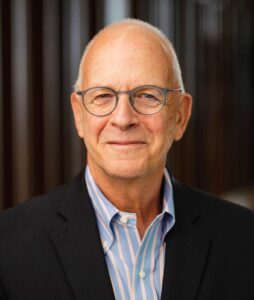 Amos N. Guiora is Professor of Law at the S.J. Quinney College of Law, the University of Utah. He is a Distinguished Fellow at The Consortium for the Research and Study of Holocaust and the Law at Chicago-Kent College of Law, and a Distinguished Fellow and Counselor at the International Center for Conflict Resolution, Katz School of Business, University of Pittsburgh. Professor Guiora is on the Board of the Lauren McClusky Foundation.
 Nancy joined Person to Person in June of 2019, bringing expertise and experience in food insecurity, anti-poverty, and women’s and children’s issues. Prior to joining P2P, Nancy served for seven years as the Executive Director at Neighbor to Neighbor, a Greenwich-based organization dedicated to providing food and clothing to low-income families and children, and prior to that, practiced employment litigation with Baker McKenzie in NYC.
 Connecticut, as we all know, is actually a wonderful place to live and raise a family. Yet only half of Connecticut residents said they were proud of the state in a recent survey, even though 73% felt it was a good place to live. Part of the challenge is that Connecticut has not defined itself around its resources and attributes; there are few who can describe what’s wonderful about our state and those in Fairfield County might see it merely as a suburb of New York. Governor Lamont is determined to change that so that people know better what makes Connecticut special.
 Aaron Cooper has dedicated his career to pre-k through grade 9 independent school education. He has been a teacher, coach, advisor, and administrator for the last 22 years. Aaron Cooper joined New Canaan Country School in July 2018.
 Juliet Cain is a cofounder of the Darien Pollinator Pathway with Deepika Saksena. The DPP seeks, through events and publications as well as through advocacy at the state and local levels, to help eliminate the use of pesticides in our yards and public spaces and to restore pollinator populations with native plantings. As former Chair of the Darien Beautification Commission, Juliet spearheaded the native plantings on the slopes at the Darien Town Hall.
 Dr. Joseph W. Polisi was president of the Juilliard School for 34 years from 1984-2018 and is now president emeritus and chief China officer of the School. Through his experiences at Juilliard and Lincoln Center, Polisi creates in his book a complex tableau which traces the idealistic and determined efforts by John D. Rockefeller, 3rd and his colleagues to create a unique environment where the most prominent performing arts institutions in New York City would be brought together at a venue named Lincoln Center for the Performing Arts.
 Upon stepping down from his role as president of Juilliard, Polish became Chief China Officer, supervising the overall development of The Tianjin Juilliard School in Tianjin, China. Opened in fall 2020, Tianjin Juilliard offers audition-based programs on pre-college and graduate levels. The graduate school program is taught in English and offers a USA-accredited master’s degree from The Juilliard School. There are also public programs for adult learning and instrumental training, as well as an innovative learning environment, Juilliard Imagination, featuring interactive exhibitions for adults and children.