Global Oil and Gas Market
Steve Villas analyzes the global oil market, highlighting that while the United States leads global production at over 13 million barrels per day due to horizontal drilling and hydrofracking, it remains reliant on imports due to domestic demand and refinery setups. The global market handles roughly 100 million barrels daily, with demand shifting from flat Western consumption toward rapidly growing middle classes in China and India. He will also discuss the impact of the Iran war and the periodic closing of the Strait of Hormuz on supply.
Steve demystifies oil pricing and discusses other geopolitical influences, including how OPEC Plus manages global pricing through strict production quotas rather than fixed prices, and how the Russian shadow fleet circumvents international price caps using covert ship-to-ship transfers. Villas has strong confidence in free markets, asserting that society will never fully run out of oil, though its long-term market dominance will eventually transition to new technologies.
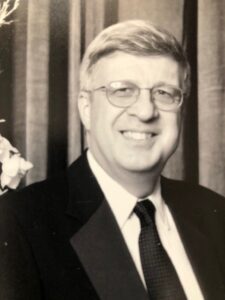 Steve graduated from Lehigh University with a BS degree in engineering and obtained his MBA in finance from the Wharton School, Univ. of Pennsylvania. He has worked his entire 45-year career in the petroleum industry, holding positions with Exxon, Standard Oil of Ohio, British Petroleum, and Hess Corp. Steve has been involved with, and spoke on, chemical plant design, advertising and promotion, supply and logistics, government affairs, oil and gas trading, financial hedging, oil and gas marketing, and other current topics of interest in the global oil markets.
Add “world traveler” to the list. Steve logged more than 6.5 million frequent flier miles over his career. “I’ve been to Russia six times, China three times, and I lost track of Southeast Asia,” he says. When Villas talks, his stories blend humor, humility, and gratitude. His legacy isn’t just financial. It’s the ripple effect of generosity, mentorship, and heart. “Money isn’t the most important thing you can give,” he says. “What matters is what you share of yourself.”