The room is not available due to a DCA event.
Month: July 2026 (Page 1 of 2)
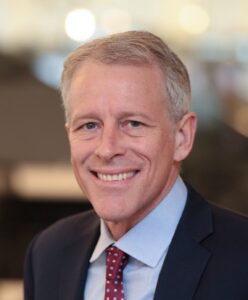 Get ready for a broad ranging and provocative talk by a notable Wall Street veteran. Whitney Tilson’s career has been focused on managing risks with investments. His book, The Art of Playing Defense is meant to be a practical and actionable guide filled with common-sense ideas for avoiding calamities, such as marrying the wrong person or having a good marriage go bad, getting thrown in jail, going bankrupt, or suffering a debilitating illness or injury.
Whitney says, “I’ve managed to avoid these disastrous outcomes – and hope I can help you do so as well! It’s no fun thinking about all the things that can go wrong in life, but if you want to get ahead, you have to start by not falling behind.”
As a successful investor, we asked Mr. Tilson to share with us his approach which has helped him and others avoid the major market downturns of the 21st Century. We are also curious about his “Twelve Questions to Ask before Marrying Someone” and how his 25-year-old daughter received his advice. With our proximity to NYC, we also couldn’t pass up the opportunity to hear from him about his recent run for the Democratic nomination for mayor in 2025.
Referred to the DMA by Mark Nunan
Whitney Tilson
Whitney Tilson is Editor of Stansberry Research, which provides advice, commentary and in-depth research and analysis to help people become better investors. The business has more than 100,000 paid subscribers. Mr. Tilson founded and, for nearly two decades, ran Kase Capital Management, which managed three value-oriented hedge funds and two mutual funds, with assets that peaked at over $200 million.
Mr. Tilson published his fourth book in 2021, The Art of Playing Defense: How to Get Ahead by Not Falling Behind. He has also co-authored two books, The Art of Value Investing: How the World’s Best Investors Beat the Market (2013) and More Mortgage Meltdown: 6 Ways to Profit in These Bad Times (2009), and was a contributor to Poor Charlie’s Almanack: The Wit and Wisdom of Charles T. Munger (2005), the definitive book on Berkshire Hathaway Vice Chairman Charlie Munger. In addition, he has written for Forbes, the Financial Times, Kiplinger’s, the Motley Fool and TheStreet.com.
He has appeared dozens of times on CNBC, Bloomberg TV and Fox Business Network, was on the cover of the July 2007 Kiplinger’s, has been profiled by the Wall Street Journal and the Washington Post, and has spoken widely on value investing.
Prior to launching his investment career in 1999, Mr. Tilson spent five years working with Harvard Business School Professor Michael E. Porter studying the competitiveness of inner cities and inner-city-based companies nationwide. He and Professor Porter founded the Initiative for a Competitive Inner City, of which Mr. Tilson was Executive Director. Mr. Tilson also led the effort to create ICV Partners, a national for-profit private equity fund focused on minority-owned and inner-city businesses that has raised nearly $500 million.
Mr. Tilson received an MBA with High Distinction from the Harvard Business School, where he was elected a Baker Scholar (top 5% of class), and graduated magna cum laude from Harvard College.
Mr. Tilson is an avid mountaineer – he climbed the Nose of El Capitan in June 2020 and has summited Mt. Kilimanjaro, Mt. Blanc, the Matterhorn and the Eiger. He also regularly competes in obstacle course races, including the world championships pro division. He has run seven 24-hour World’s Toughest Mudders, winning the 50+ age group twice and setting the all-time age-group record of 75 miles in 2016.
Mr. Tilson spent much of his childhood in Tanzania and Nicaragua (his parents are both educators, were among the first couples to meet and marry in the Peace Corps, and have retired in Kenya). Consequently, Mr. Tilson is involved with a number of charities focused on Ukraine (to which he has traveled four times since the invasion and raised more than $18 million), education reform and Africa. Most recently, he was a candidate in the 2025 Democratic primary for Mayor of New York City.
Mr. Tilson lives in Manhattan with his wife of 32 years, with whom he has three adult daughters
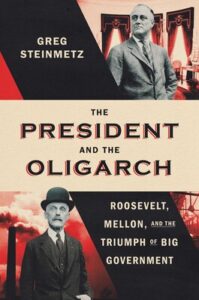 Why did one of our greatest presidents (FDR) ruthlessly persecute one of the richest men in America (Andrew Mellon)?
By any measure, Franklin D. Roosevelt is one our most admired presidents. But behind the beaming smile and folksy fireside chats was a ruthless politician willing to use the massive powers of the federal government to crush his enemies. In this thrilling exposé, Greg Steinmetz recounts how FDR targeted America’s third-richest man to prove his progressive credentials and rally support for his sweeping social agenda.
He found his scapegoat in former Treasury Secretary Andrew Mellon. Mellon’s name dripped riches. More than any other, it symbolized the Roaring Twenties economic boom and the crack up that followed. FDR publicly blamed Mellon for the Great Depression, using him as a convenient diversion from the New Deal’s failure to bring jobs back to a devastated economy.
Roosevelt tortured the aging, frail and reclusive Mellon, cooking up a fake criminal charge in a bid to put him behind bars. When that fizzled, Roosevelt kept up the fight by making Mellon miserable in tax court. Mellon died before the verdict but not until, one final, jaw dropping twist occurred in this strange clash of titans.
This shocking book reveals the secret sinister side of Roosevelt—and explains how big government won out of over the libertarian economic order that had reigned since the birth of the republic.
There will be a book signing after the talk with a Barrett’s Bookstore representative on-site at the entryway table.
Greg Steinmetz Biography
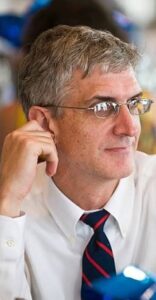 Greg Steinmetz is an American journalist, retired securities analyst and author. He previously worked for The Wall Street Journal, where he covered investment banking before becoming Berlin Bureau Chief and then London Bureau Chief. His first book, The Richest Man Who Ever Lived: The Life and Times of Jacob Fugger, was heralded by Andrew Ross Sorkin as one of the best reads of 2015. The Wall Street Journal and Jim Cramer named his second book, American Rascal: How Jay Gould Built Wall Street’s Biggest Fortune, as a top book of 2025.
Steinmetz was born and raised in Cleveland, Ohio. He graduated from Colgate University in 1983 with a Bachelor of Arts degree in History and German, and earned a master’s degree from the Medill School of Journalism at Northwestern University.
Steinmetz spent 15 years working as a journalist for the Sarasota Herald-Tribune, the Houston Chronicle, Newsday, and The Wall Street Journal. He served as the Bureau Chief for The Wall Street Journal in Berlin and London. In 2023, he retired from a New York money management firm where he was a partner and a member of the board of a mutual fund.
His third book, The President and the Plutocrat: Roosevelt, Mellon and the Triumph of Big Government, has been just published in the fall of 2026.
.
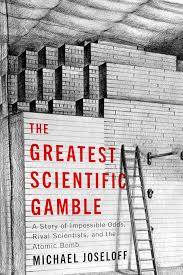 After a devastating run of German victories, Allied troops are beginning to halt Hitler’s advance. But far from the battlefields, Allied scientists are struggling. Intelligence reports put them a distant second behind the Germans in a competition that could determine the outcome of the war: the race to build the world’s first nuclear weapon.
During World War II, a group of physicists who had once been close friends found themselves on opposite sides of a deadly race. German scientist Werner Heisenberg and American physicists Robert Oppenheimer, Enrico Fermi, and Sam Goudsmit were all leading figures in nuclear research. But after the attack on Pearl Harbor, their shared passion for science turned into a high-stakes competition to build the world’s first atomic bomb—a weapon that could determine the outcome of the war.
Heisenberg had a two-year head start, and the possibility that Nazi Germany might beat the Allies to the bomb terrified American scientists. The Manhattan Project, led by U.S. Army General Leslie Groves, became a massive effort to catch up. Fear of Heisenberg haunted Manhattan Project scientists. At one point, Groves even approved plans to bomb Heisenberg’s lab and assassinate him to stop Germany’s progress. Meanwhile, Sam Goudsmit led a secret military unit tasked with tracking down Heisenberg and uncovering the truth about the Nazi nuclear program. What they found would surprise everyone. The Greatest Scientific Gamble tells the dramatic and little-known story of how personal relationships, wartime fear, and scientific ambition collided in the race to unlock the power of the atom.
There will be a book signing after the talk signing with a Barrett’s Bookstore representative on-site at the entryway table.
Michael Joseloff
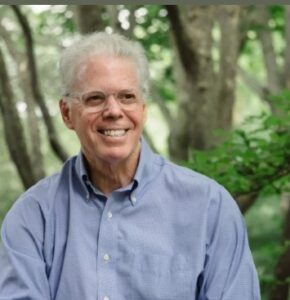 Michael Joseloff is a TV news and documentary producer living in New York City and winner of four Emmy awards. His work has aired on ABC, CBS, PBS and numerous cable TV networks.
He is author of The Greatest Scientific Gamble (Michigan State University Press) and Chasing Heisenberg: The Race for the Atom Bomb (Amazon Publishing).
He has produced programs for the acclaimed PBS series FRONTLINE as well as a business-related documentary, crime dramas, biographies and reality-based programs for cable tv. Before that he produced hundreds of reports for The MacNeil/Lehrer NewsHour on PBS about current events, history, science and more.
 The 2027 open enrollment season will be one of the most tumultuous in recent years. Key trends in the Medicare marketplace are the elimination of temporary Part D premium subsidies and increased regulatory scrutiny of Medicare Advantage Plans. Overall Advantage Plan growth has slowed and aggressive hospital negotiations, benefit reductions, reduced product offerings, and retraction from unprofitable markets are common.
Other developments affecting the environment include the elimination of enhanced subsidies in the individual market in 2026 and the cuts in Medicaid slated to take effect in 2027. These changes will disrupt hospital finances and challenges to our local hospitals can affect us all.
Finally, all Americans will continue to be affected by the approval of astoundingly expensive new prescription drugs.
Please join Maura Carley for a discussion on how to avoid the landmines integral to the healthcare experience in the U.S.
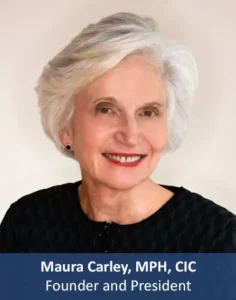
Maura Carley, Founder and CEO Healthcare Navigation, LLC
Maura Carley is Founder and CEO of Healthcare Navigation LLC, a national healthcare advocacy and health insurance consulting firm.
Before founding Healthcare Navigation, Carley served in executive positions both in the hospital and insurance industries. She is a former Regional Director of Kaiser Permanente, one of the nation’s oldest and largest HMOs. She began her career as an assistant administrator at Yale-New Haven Hospital and subsequently served as Vice President of Operations at Stamford Hospital.
Carley received her Master’s in Public Health from Yale University and completed an Executive Management Program through the Stanford University Business School. She is a fellow in the American College of Healthcare Executives and a certified health insurance consultant.
She has served on many non-profit boards in Connecticut and New York. Carley served on the Board of Directors for Access Health CT and is a former Vice Chair of the Darien Social Services Commission. She currently serves on the Board of the Connecticut Women’s Forum, a chapter of the International Women’s Forum.
Carley has spoken on healthcare topics at programs across the United States and has been interviewed in articles for many major national periodicals.
Carley is also the author of Health Insurance: Navigating Traps and Gaps, which became Amazon’s #1 best seller on health insurance shortly after its publication in 2012 and was awarded the Living Now Book award in 2015. Many changes have occurred since Navigating Traps and Gaps was published but because it is a book of actual client case studies, it documents the history of challenges Americans face dealing with our healthcare environment, many of which remain today.
The Mather Legacy
Directed by Tim Smith and narrated by Scott Pelley, this short film (film trailer link below) is a powerful tribute to both the Mather family and the enduring American spirit. Spanning nearly four centuries and interviewing experts in American history, The Mather Legacy chronicles the family’s journey from their 1635 arrival in the New World to the present day.
Darien’s Mather Homestead. Built in 1778 and raided by Tories during the Revolutionary War, Mather Homestead was home to six generations of Mathers, including Moses Mather, Darien’s leading voice for freedom in 1778. It is now dedicated to historical education.
The Mather Legacy TRAILER | Videos & Movies on Vimeo
There will be discussion after the 30-minute film.
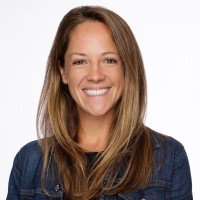 Tim Smith
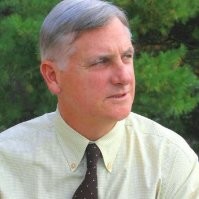
Over the last 25 years, Tim has excelled as a television news producer adept at producing top rated and award-winning documentaries, interviews & news segments for America’s leading news outlets. The quality of his work is attested to by winning a national and regional Emmy, five Emmy nominations, two Gracie Awards, Grierson Award, Genesis nomination & Cable Ace nomination.
Tim has worked with and directed top news talent including Lester Holt, Brian Williams, Rachel Maddow, Chris Matthews, Judy Woodruff, Norah O’Donnell, Jim Lehrer, Bob Woodward, Chuck Todd, Charlie Rose, Natalie Morales, Roger Mudd and Savannah Guthrie. His strong record of big gets includes interviews with Bill Clinton, Jimmy Carter, Dick Cheney, John Updike, Joe Biden, Audrey Hepburn, Ted Kennedy, Sandra Day O’Conner, Gerald Ford, Laura Bush, Donald Trump and Mitt Romney.
Samantha Gault
Samantha is the Executive Director of the Mather Homestead Foundation and has a BA from Dartmouth College and an MA from Middlebury College. This beautifully preserved house and landmark offers a glimpse into American revolutionary history through rich and engaging programming, including literary conversations, lectures, and events. This past year Samantha and the Mather Homestead have had a focus on the America 250 celebration from the point of view of Middlesex Parish. Samantha reflected, “for me, studying history and looking back has always been about not losing my way. How can you know where you are or where you are going if you do not know where you have been? That is as important for nations and communities as it is for individuals”.
Global Oil and Gas Market
Steve Villas defined crude oil as a raw material formed from organic matter over 75 million years under immense pressure and temperature. He noted that it held no intrinsic value until it was processed by refineries into everyday commodities like gasoline, diesel, and plastics. The global oil marketplace involved unique players. Unlike the United States, which relied entirely on public or private entities, most global producers utilized state-owned companies like Saudi Arabia’s Aramco or Mexico’s Pemex to advance national interests. Additionally, massive global trading firms like Vitol and Glencore moved volumes that surpassed the top three oil corporations combined.
The global oil market ran on approximately 100 million barrels per day, predominantly traded in U.S. dollars. Thanks to horizontal drilling and hydrofracking, the U.S. spiked its production to over 13 million barrels per day, joining Saudi Arabia and Russia as the top three global producers. However, because domestic demand remained high and local refinery infrastructures were highly specialized, the U.S. continued to rely on imports. Conversely, China’s skyrocketing demand turned it into the world’s leading crude oil importer. Global oil pricing was primarily dictated by regulated futures markets tracking benchmarks like Brent and West Texas Intermediate.
Villas emphasized that three independent variables fundamentally determined the price of any commodity: quality, location, and time. Quality dictated value based on the blend of products a crude yielded and its impurities. For instance, WTI was high quality and lacked sulfur, whereas Venezuelan crude was low quality and high in sulfur, making it highly expensive to refine. Location altered value based on the costs required to transport the oil from the wellhead to the refinery gate via complex pipeline networks and massive ocean tankers. Time, the third key element, influenced value through seasonal demand shifts and market expectations. Villas illustrated this simply by noting that heating oil was inherently more valuable in January than it was in July. Furthermore, he explained that a downward-sloping futures curve indicated that the market viewed current high prices as a temporary disruption that would eventually sort itself out.
To bridge geographical distances, the shipping industry relied on six principal sizes of oil tankers. Operating costs were relatively similar across the fleet, meaning logistics coordinators always preferred shipping on the largest vessel possible. The smaller categories, which included Handy Max and Panamax vessels, typically carried refined petroleum products up to 250,000 barrels in capacity. For crude oil transportation, the industry utilized four larger vessel classes starting with the Afromax at 700,000 barrels, the Suez Max at one million barrels, the Very Large Crude Carrier or VLCC at two million barrels, and the Ultra-Large Crude Carrier at 3.5 million barrels. While ultra-large carriers fell out of favor once northern Europe achieved greater energy self-sufficiency, most of the crude oil moving out of the Persian Gulf traveled aboard the two-million-barrel VLCC platforms.
Geopolitical maneuvers heavily influenced market values. The OPEC cartel artificially dictated supply reductions to achieve higher prices to support national social programs. Western nations drew down their Strategic Petroleum Reserves to offset the loss of supply from the Persian Gulf due to the closure of the Strait of Hormuz. Villas explained that while threats to close the strait had existed for 47 years since the overthrow of the Iranian Shah, actual closures drastically shifted the market economics. Historically, the risk of a strait closure added a mere 25 to 50 cents per barrel for insurance, but active tensions pushed those premiums up to 5 dollars a barrel. A closure also marooned massive gas ships, cutting off vital energy exports. Combined with strict state-enforced import limits in China, the release of Western reserves temporarily kept global oil prices around 96 to 108 dollars a barrel, preventing them from surging into the 120 to 150-dollar range.
Villas shared a detailed case study from his time at Hess Corporation during the March 2020 pandemic lockdowns. When product demand abruptly flatlined globally, Hess faced zero revenues and filled up storage limits. Instead of shutting down operations and letting go of highly skilled personnel, Hess executed a massive logistical pivot. They used pipelines to move North Dakota crude down to Texas, loaded it onto three massive VLCCs out in the Gulf of Mexico using smaller shuttle ships, and sailed the crude around Africa to Singapore. The oil was anchored in tranquil waters as a floating storage mechanism for nearly eight months until China’s economy began showing signs of recovery. Backed by financial hedging markets, this year-long exercise successfully kept production flowing and preserved Hess’s workforce intact.
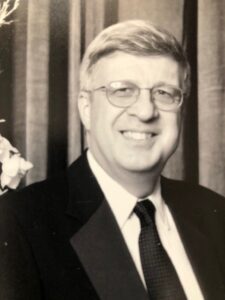 Steve graduated from Lehigh University with a BS degree in engineering and obtained his MBA in finance from the Wharton School, Univ. of Pennsylvania. He has worked his entire 45-year career in the petroleum industry, holding positions with Exxon, Standard Oil of Ohio, British Petroleum, and Hess Corp. Steve has been involved with, and spoke on, chemical plant design, advertising and promotion, supply and logistics, government affairs, oil and gas trading, financial hedging, oil and gas marketing, and other current topics of interest in the global oil markets.
Add “world traveler” to the list. Steve logged more than 6.5 million frequent flier miles over his career. “I’ve been to Russia six times, China three times, and I lost track of Southeast Asia,” he says. When Villas talks, his stories blend humor, humility, and gratitude. His legacy isn’t just financial. It’s the ripple effect of generosity, mentorship, and heart. “Money isn’t the most important thing you can give,” he says. “What matters is what you share of yourself.”
The Medium is the Mirror
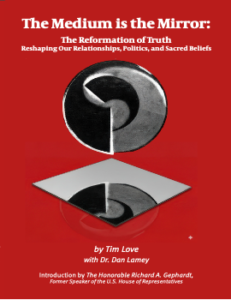
Congressman Dick Gephardt’s Presentation
Congressman Dick Gephardt opened his presentation with an optimistic view of America’s future, which he rooted in his decades of interaction with everyday citizens. He reflected on his 35-year career in public service—knocking on doors in St. Louis, hosting weekly town halls, and campaigning across all 50 states during his two presidential bids—concluding that the vast majority of Americans were fundamentally good people. This foundational civic health, he argued, was what had sustained the radical 1789 founding experiment of self-governance without a king.
However, Gephardt shifted to a grave warning about modern threats to this system, focusing heavily on a corrupted information environment driven by big tech and social media algorithms. He labeled these media platforms “hate and outrage machines” designed strictly for addiction and financial profit. Gephardt outlined two major consequences of this unmoderated digital ecosystem: the tragic physical harm to children exposed to dangerous online viral challenges and the deep polarization destroying American democracy. He noted that while political disagreement was normal, algorithmically manufactured hatred had paralyzed Congress, which merely reflected a fractured electorate. Left unchecked, this gridlock risked driving citizens to look toward an authoritarian “Plan B” form of government.
To combat this, Gephardt detailed his volunteer work with the cross-partisan Council for Responsible Social Media. He advocated for legislative reform, specifically targeting the amendment or repeal of Section 230 of the Communication Act. He admitted that voting for Section 230 in the mid-1990s—which shielded platforms from content liability—was one of his worst legislative mistakes, as tech giants later used it as an absolute shield against accountability. Finally, he urged the development of secure, decentralized public platforms modeled after Taiwan’s civic technologies to foster genuine community consensus and rebuild trust in self-governance.
Tim Love’s Presentation
Tim Love, a global advertising veteran and former Vice Chairman of Omnicom, delivered a presentation focused on how technology manipulated human persuasion and threatened cognitive self-governance. Love contextualized the crisis by looking back 30 years to 1996, when the internet had only 15% penetration among American adults. He noted that lawmakers originally passed Section 230 under the false assumption that the internet would operate on subscription models or remain a simple, empty content distribution pipe. Instead, the modern internet evolved into an aggressive surveillance economy funded by advertising. Love explained that the introduction of user metrics like shares and retweets around 2012 allowed companies to map, predict, and ultimately manipulate human behavior by tailoring content to exploit emotional vulnerabilities.
Throughout his presentation, Love effectively utilized several video clips to anchor his arguments and visually engage the audience. He played a data-visualization clip tracking how people met and stayed together from 1930 to 2024, which visually emphasized the sudden, absolute dominance of online dating over traditional structures like church, school, and neighbors. To reinforce his points about the shifting standard of objective reality, he curated a compelling montage of historical news footage and political clips. The first two clips mentioned, featuring Edward R. Murrow’s critique of McCarthyism and Walter Cronkite’s editorial on the Vietnam War stalemate, showed a positive use of journalism to present the alternative side of the argument. In contrast, the last three clips—covering Richard Nixon’s Watergate defense, Bill Clinton’s Lewinsky denial, and televised media dismissals of the COVID-19 pandemic—showed how leaders and influential journalists presented one-sided views to subvert the truth.
Love used psychological and historical framing to explain this conditioning. He introduced the concept of “commitment consistency,” a psychological trait where individuals formed a belief and doubled down on it to avoid discomfort. While traditional advertising used this concept to track brand loyalty, modern tech algorithms exploited it at an unprecedented scale. Love explicitly rejected the term “brainwashing”—which historically relied on physical isolation and duress, such as the tactics used on prisoners during the Korean War—and instead termed the modern phenomenon “brain hijacking” or “neuro dystopian conditioning”. He explained that as communication shifted from synchronous, face-to-face interactions to asynchronous typing, texting, and screen consumption, it fundamentally rewired human brains. This left individuals uniquely susceptible to continuous algorithmic manipulation.
To demonstrate the real-world danger of this environment, Love displayed multiple examples of digital disinformation and election interference. He highlighted documented platform infiltration by bad actors during the 2016 U.S. election and the Brexit vote, alongside recent massive compromises of election data and an eight-fold increase in hostile foreign fake news operations. Love argued that the “Magnificent Seven” tech monopolies now held an extraordinary concentration of power, controlling not just physical infrastructure like historic robber barons, but the absolute distribution and visibility of human thought.
Love closed his presentation with a direct call to action, challenging the audience to unite and vote based on “Issue One” rather than blind political party loyalty. He defined “Issue One” as the urgent national fight against systemic ignorance, intolerance, and indifference to protect America’s most fundamental freedom: the freedom to think for ourselves. According to Love, both major political parties and all major media institutions have been deeply compromised by money and lobbying from tech monopolies. By treating cognitive self-governance as the primary voting issue, citizens can elect representatives committed to structural communication policy reform. Specifically, Love asserted that voters must force their representatives to sunset Section 230 and dismantle the artificial algorithmic echo chambers that intentionally polarize the electorate for corporate profit.
Alongside this electoral strategy, Love shared his own personal act of independence: giving up his smartphone for a basic phone that lacked mind-reading algorithms, tracking apps, and data harvesting features. He challenged the audience to reclaim their cognitive freedom by disconnecting from these devices, asserting that when consumers withheld their attention, tech lobbies would finally be forced to serve the public interest rather than their own corporate profits.
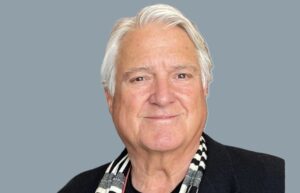 Tim Love is former Vice-Chairman of Omnicom Group, a leading global advertising and marketing services company. Throughout Tim’s career in the advertising industry he helped clients be more globally sensitive, collaborative and effective. His extensive global brand-building experience involved residing in Brussels, Tokyo, Singapore and New York City. He worked with some of the world’s most sophisticated marketers: P&G, Nissan and Infiniti automobiles, PepsiCo, Unilever, Gillette, Mars, UBS, Kraft, Philips and J&J.
Since retiring from Omnicom in 2013, Tim has returned to artistic beginnings. He also co-taught at Oxford University’s Said School of Business MBA program on “Branding and Communication,” he was on the faculty of the US Marketing Communications College, a pro-bono initiative at the Foreign Service Institute of the US State Department. He has also lectured on “Discovering Truth” an initiative he started 8 years to discern how people discern truth in a post-digital world. He has lectured at numerous universities across the country and a the National Voice of America Museum of Broadcasting. His 2024 podcast interview with PBS station WGCU won a regional Edward R. Murrow Award and will compete for a national award in August.
He is author of two award-winning books available on Amazon- “Discovering Truth: How to Navigate Between Fact & Fiction in an Overwhelming Social Media World” (Internationalist Press) and “The Book that Gets Better with Age” (LID London). Recent work is also available on Substack@timloveideas.com- “The Elephant in the Room” and “The Cost of Not Pursuing Truth.” and “The Medium is the Mirror.” His podcast series, Tim Love’s Discovering Truth includes 58 episodes of interviews with leading communication experts including Jane Goodall.
Tim was a founding member and first chairman of the 4A’s Multicultural Advertising Internship program, now in its 52nd year and a founding member for Business for Diplomatic Action (BDA), focused on improving international business cooperation.
He recently was invited to be on the Council for Responsible Social Media (CRSM) a cross-partisan initiative of Issue One in Washington DC.
Tim is a James Webb Young Fellow with a Masters in Communication from the University of Illinois and he has a Bachelor of Science in Business Administration with a minor in Fine Arts from Miami University in Ohio. Tim Love Ideas, LLC, is doing commissioned art and creating ideas. Also see www.timlovesworld.com.
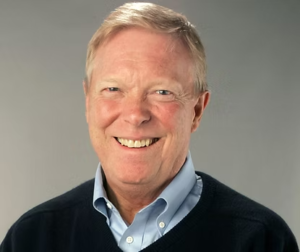 Richard. A Gephardt, President and CEO of Gephardt Group
Mr. Gephardt served for 28 years in the United States House of Representatives from 1976 to 2004, representing Missouri’s 3rd Congressional District, home to his birthplace St. Louis. In his role as Leader, Mr. Gephardt emerged as one of the leading strategists of the Democratic Party’s platform and chief architect to landmark reforms ranging from healthcare, pensions, education, energy independence and trade policy. In his first year in Congress, he was appointed to both the House Ways & Means and Budget Committees. He was elected to serve as House Democratic Leader for more than 14 years, as House Majority Leader from 1989 to 1995 and Minority Leader from 1995 to 2003. Mr. Gephardt ran for the Democratic nomination for U.S. President twice, in 1988 and 2004. Mr. Gephardt retired from the U.S. Congress in 2005 to found Gephardt Group, a privately held labor relations consulting and government affairs firm. He was Chair of the Board of Trustees of the Scripps Research Institute, a private, non profit research organization engaged in biomedical science. Most recently, Mr. Gephardt was a member of the Board of Directors at SpiritAerosystems, Centene Corporation, Ford Motor Company, CenturyLink and U.S. Steel Corporation. In addition, he is a member of the Board of Directors at The Washington Center for Internships and Academic Seminars, a member of the Council on Foreign Relations and is the Founder of the Gephardt Institute for Civic and Community Engagement at Washington University in St. Louis. Widely known for his advocacy for international human rights, Mr. Gephardt served as Chairman of the National Endowment for Democracy, a private, nonprofit organization that endeavors to strengthen democratic institutions around the world through nongovernmental efforts, from 2009 to 2013.
Mr. Gephardt began his career in public service in 1968 as a precinct captain to St. Louis’ 14th ward. From 1971 to 1976, he served as Alderman for the city’s 14th ward. In 1976, he was elected to the U.S. Congress, succeeding 24-year incumbent Leonor Sullivan.
Mr. Gephardt earned his Bachelor of Science from Northwestern University in 1962 and his juris doctorate from the University of Michigan Law School in 1965.
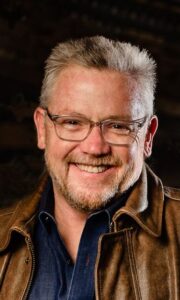
Kevin Coupe – Getting A Grip On Grocery: The Local, The Global, & The Cutthroat
Drawing from over four decades of industry experience, Coupe offered a lively, humor-infused look at the past, present, and future of the U.S. food retail market.
Coupe opened with sharp wit, reflecting on how radically the grocery world had transformed since he started reporting on it in 1984 when Walmart did not sell groceries, A&P operated nearly 1,000 stores, and e-commerce was entirely nonexistent. He quipped about the absurdities of modern consumer perceptions, noting how shoppers wildly overestimated supermarket profit margins at around 35%, when actual margins hovered at a modest 3.5%. Drawing laughter from the room, Coupe joked that if grocery stores were pulling in 35% margins, he would have quit journalism years ago to open his own supermarket.
Throughout his talk, Coupe balanced humor with keen industry observations about the dominant retail giants of the time. He contrasted Walmart—which sat within 10 miles of 90% of U.S. households and was aggressively testing drone delivery—with Amazon’s relentless focus on rapid fresh delivery and automated subscriptions. Local corridors like the Boston Post Road served as prime examples of where regional favorites like Trader Joe’s, Whole Foods, Wegmans, Costco, and Stu Leonard’s actively competed for consumer loyalty.
Beyond price perception, Coupe highlighted several pressing Main Street challenges, including maintaining trust amidst food safety scares like cyclosporiasis outbreaks and navigating consumer anxiety surrounding dynamic electronic shelf tags. He also pointed to the growing influence of GLP-1 weight-loss medications, noting that while 11% of the U.S. population was using them, few food retailers had adapted their inventory to cater to those changing appetite patterns.
To thrive in an environment dominated by mega-retailers, Coupe urged local businesses to abandon complacency and adopt five core strategies: actively competing every day rather than relying on past reputation, eliminating non-essential practices, offering distinct experiential spaces and proprietary products, prioritizing long-term customer relationships over individual transactions, and using authentic storytelling to build customer trust.
“Content Guy” / Prime Storyteller, MorningNewsBeat.com, Author, “Retail Rules! 52 Ways To Achieve Retail Success,” & Co-Author, “The Big Picture: Essential Business Lessons From The Movies”
For more than 40 years, Kevin Coupe has been bringing to audiences all over the world a wealth of experience, sharp storytelling skills, provocative and contextual insights, unique worldview and “serious irreverence” about the world of business and consumers. He is the author of “Retail Rules! 52 Ways To Achieve Retail Success,” a guidebook for competing effectively and efficiently on Main Street, and co-author, with Michael Sansolo, of “The Big Picture: Essential Business Lessons from the Movies,” which uses film narratives to teach about leadership, marketing and surviving the workplace. A quarter century ago, he launched MorningNewsBeat.com, providing “business news in context, and analysis with attitude” to more than 25,000 subscribers all over the world, finding critical, relevant and resonant lessons not just in the world of retailing, but also in sports, popular culture and a wide range of other businesses. An independent survey recently ranked MNB as the “top industry news and information site.” And, Kevin is an adjunct faculty member at Portland State University in Oregon. In addition to speaking at hundreds of conferences in the U.S. and abroad and reporting from 49 states and six continents, Kevin has been a daily newspaper reporter, magazine writer/editor, video producer, bodyguard, and clothing salesman. He has supervised a winery tasting room (happily), run two marathons (slowly), driven a race car (badly), learned to box (painfully), tried stand-up comedy (amusingly), and acted in a major (but obscure) motion picture. He is married with three grown children and lives in Connecticut.

Summary of Mike Chinoy and Kathi Zellweger’s Presentation
Journalist Mike Chinoy and Swiss humanitarian worker Kathi Zellweger presented a unique, human-centric overview of North Korea to the Darien Men’s Association on September 23, 2026. Their collaborative work and presentation are centered around their co-authored book, Miss Kathy: Saving Lives in North Korea, which aims to provide a window into the daily lives of the country’s 25 million ordinary citizens. Chinoy opened the presentation by explaining that Western media and literature tend to focus almost entirely on two narrow genres: high-level nuclear diplomacy or dramatic defector escape stories. This leaves little room to understand the vast majority of the population who are simply trying to live their lives, manage daily economic realities, and survive under difficult circumstances. Chinoy noted that defector narratives are highly disproportionate in public discourse; for instance, in the first six months of 2026, only 63 defectors successfully made it out of the country.
Chinoy provided the necessary geopolitical context for Zellweger’s humanitarian work. Having traveled to North Korea 17 times since 1989 as a foreign correspondent for CNN, Chinoy met with the original leader Kim Il-sung three times. He noted that, contrary to the typical cartoon clichés of an absurd state, the regime has consistently executed calculated political strategies. Historically, Pyongyang sought a better relationship and security guarantees from the United States—such as through the 1994 Agreed Framework—but mutual suspicion and political failures repeatedly broke down these deals. Following the collapse of the 2019 Hanoi Summit with Donald Trump, current leader Kim Jong-un fundamentally shifted gears. The regime wrote off the idea of rapprochement with Washington and instead forged an exceptionally close military and economic alliance with Russia, trading weapons and troops for food, cash, and technology, while carefully maintaining ties with China.
Operating amidst this constant international tension, Kathi Zellweger managed over three decades of field experience, making 75 trips to North Korea—the longest continuous history of humanitarian engagement of any individual. Beginning her work with the Catholic charity Caritas in Hong Kong, her direct involvement with North Korea began during the catastrophic 1995 floods, which triggered a severe famine that claimed between 600,000 and 3 million lives. Zellweger built relationships of trust with local doctors, nurses, and government officials by remaining strictly impartial and respectful. To overcome widespread international doubts about the military siphoning off relief goods, she established rigid, countersigned bilateral agreements that specified exactly who the beneficiaries were and how long rations would last, allowing her to monitor distribution directly.
Zellweger shared an amusing anecdote from her early days living in Pyongyang that highlights the ever-present state surveillance. Before her office was connected to a secure Swiss government server, she had to rely on a standard local landline. One Saturday afternoon, the spouse of her agricultural expert was on the phone chatting with her 94-year-old mother in France, casually speaking in a mixture of English and French. Suddenly, the line clicked, and a monitoring voice interrupted the call, politely requesting, “please not to change languages”. Despite such pervasive state control, Zellweger emphasized that ordinary North Koreans maintain a vibrant sense of humor even in grim circumstances. While visiting a local free market, she asked a female vendor what she was selling that day. The woman looked at her and playfully responded, “Everything, even my husband, and at a discount!”
Over her extensive career, Zellweger expanded her efforts from emergency food distribution to sustainable development and specialized health programs. She spearheaded a Sloping Land Management Program to teach housewives contour-belt planting on hillsides to reverse soil erosion and boost crop yields, and she managed the Pyongyang Business School for four years, bringing in foreign lecturers to teach young North Koreans the basics of capitalism and global economics. In 2015, she established her own Hong Kong-based non-profit, Coreat, which funded over 30,000 cataract surgeries across 10 hospitals and built greenhouses at child residential centers.
Through this prolonged engagement, Zellweger tracked a massive societal transformation she calls the “Five M’s”: the growth of unofficial Markets, the spread of Money, the rise of Mobile phones, the influx of Motor cars, and the emergence of an urban Middle class in Pyongyang. A sixth “M”—Mindsets—began changing among a younger generation born during the famine who never fully relied on the state. However, this growing consumerism and hunger for knowledge sparked a severe regime backlash, leading to significantly tighter domestic surveillance and information censorship since 2017.
The presentation concluded with a sobering look at the current reality. North Korea completely sealed its borders in response to COVID-19 in early 2020, forcing almost all UN and NGO teams to leave by spring 2021. International aid workers have still not returned, leaving a massive information vacuum. According to a 2025 UN report, 46% of the population—roughly 11.8 million people—remains undernourished due to chronic food insecurity, decaying infrastructure, and a lack of basic medical equipment. Zellweger strongly asserted that decades of Western economic sanctions have completely failed to alter the regime’s nuclear ambitions, instead disproportionately punishing ordinary people. Both speakers advocated for a shift toward long-term development, pragmatism, and a period of peaceful coexistence rather than relying on isolation and pressure.
CNN Coverage of Miss Kathi
CNN covered the story behind this book and posted a 14-minute video, link below, about North Korea and Kathi’s work less than one week after their presentation to the DMA, featuring interviews with Miss Kathi and Mike Chinoy. The video shows her footage of life in areas of North Korea which few outsiders have ever seen. It also described in depth the work she did over many years to provide much needed food and health care to those in need in North Korea.
What North Korean life is actually like beyond Pyongyang
The Authors
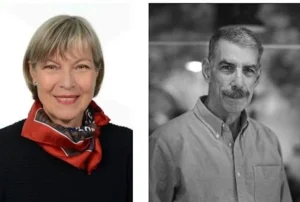
Mike Chinoy is an American journalist who, along with his co-author Kathi Zelleweger, will be speaking to us live as the first stop on their book tour of the United States. Last year, via remote video, Mike addressed the prospects for China’s increasingly muscular efforts to take over Taiwan. He has reported on many of the most important geopolitical events in Asia since the mid-1970s, including the death of Mao Zedong, the rise of China, the Hong Kong handover and developments in Taiwan, Thailand, India, Pakistan, the Philippines, North Korea and elsewhere. Mr. Chinoy spent 24 years serving as a foreign correspondent for CNN, serving as the first bureau chief in Beijing, from where he reported live during the Tiananmen Square crisis. He also worked for CBS and NBC in Hong Kong. In addition to receiving an Emmy Award for reporting on Tiananmen Square, he received a Peabody Award, a Dupont Award, and an ACE Award.
He has also covered North Korea extensively, traveling there 17 times since 1989. In1994, he became the only journalist invited to accompany President Jimmy Carter on his historic trip to Pyongyang and was the first journalist ever to file live TV reports from North Korea.
Mr. Chinoy is a consulting editor of the Taiwan Strait Risk Report, a monthly newsletter that quantifies fast-moving geopolitical risk on the Taiwan Strait.. He is also a Nonresident Scholar at the University of California, San Diego’s 21st Century China Center. Previously, he also spent 15 years as a Nonresident Senior Fellow at the U.S.-China Institute of the University of Southern California. From 2006-2009, he was a Senior Fellow at the Los Angeles-based Pacific Council on International Policy, focusing on security issues in China, North Korea, and Northeast Asia. He is the author of six books. Miss Kathi: Saving Lives in North Korea, was described by former CNN chief news executive Eason Jordan as “an unrivaled account of heartbreak and heroism in the world’s least understood nation, North Korea.”
He has a degree in Chinese Studies from Yale University and a Master’s degree from Columbia University Graduate School of Journalism. He lives in Taipei, Taiwan.
Kathi Zellweger
Kathi Zellweger is a senior aid manager with over thirty years of field experience in Hong Kong, China, and North Korea. She was based in Pyongyang for five years (2006–2011) as the North Korea country director for the Swiss Agency for Development and Cooperation (SDC), an office of the Swiss Ministry of Foreign Affairs. Before joining SDC, from 1978 to 2006, Zellweger worked in a senior post for the Catholic Agency Caritas in Hong Kong, where she played a key role in pioneering Caritas’s involvement in China and North Korea.
She also managed the Hong Kong–based KorAid Limited, a nonprofit she established in2015 to focus on serving children in institutions and people with disabilities in North Korea. She has made 75 trips to North Korea and has the longest continuous history of humanitarian engagement with the country of—literally – anyone.
Zellweger is affiliated with the Center for International Security and Cooperation (CISAC)at Stanford University in California and is a Non-resident Fellow at the European Center for North Korean Studies at the University of Vienna. She holds a master’s degree in international administration from the School for International Training in Brattleboro, Vermont.
In 2005, Zellweger was presented with The Bishop Tji Hak-soon Justice and Peace Award from a South Korean foundation established to promote social justice, peace, and human rights. In 2006, she received the honor of the Dame of St. Gregory the Great from the Vatican for her work in North Korea.
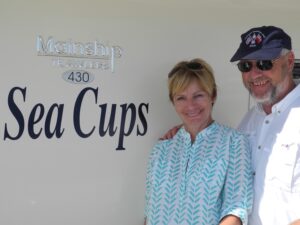
A Voyage Around America: Joern Repenning’s Great Loop Adventure
In his presentations to the DMA, Joern Repenning delivered a detailed, firsthand narrative of completing the Great Loop, an almost 6,000-nautical-mile circumnavigation by water of the Eastern United States and Canada. Rather than offering a high-level overview, Repenning focused on the real-world logistics, tactical decision-making, and personal observations from the helm.
A veteran of over 40 years in ocean cargo shipping, Repenning took on the Loop with his wife, Regina, aboard their 43-foot trawler, the Sea Cups. Preparation was rigorous. The couple joined the Great Loop Association, attended conventions, and hired a professional captain to train them on managing the vessel’s mechanical complexity, which included twin 540-horsepower diesels and dual chart plotters. Repenning emphasized that a successful voyage hinges on vessel selection and bridge clearance limits (air draft), particularly through restrictive sections like the Western Erie Canal. Boaters must carefully manage fuel, water, and power consumption while balancing time at remote anchorages against full-service marinas.
Setting off from Longboat Key, Florida, in March 2018, the couple tackled the trip in phases across two summers. A significant portion of the journey involved the physical mechanics of navigating North America’s inland infrastructure. They transited dozens of commercial locks—including one that lifted the boat nearly 100 feet and a mechanical lift that carried the vessel in slings across a road. Repenning shared insights on coordinating with lockmasters over VHF radio, managing turbulence, dodging commercial barge traffic on the Mississippi and Ohio Rivers, and monitoring depth sounders in constantly shifting shoals.
The journey was equal parts adventure and misadventure. Early on, their engine died in five-to-seven-foot seas off the Florida coast, causing a tense 30-minute roll before restarting. Later, a rough Atlantic crossing near Atlantic City sent cabinets flying, prompting Regina to briefly “jump ship” and head home. On the Mississippi, Regina accidentally mixed fresh water into the fuel tank, causing a contamination that took three days to fix. The couple also endured 100-plus-degree heat for 40 straight days and underwent a friendly Coast Guard safety inspection.
Despite the hardships, the highlights were vast, including visiting alligator farms, enjoying potlucks with fellow “Loopers,” and taking side trips to Annapolis. Repenning highlighted the seasonal rhythm necessary for the trip: moving north in the spring to stay ahead of summer heat and heading south ahead of early winter freezes.
The couple completed the Loop in September 2019, crossing their own wake to earn the official “Golden Looper” pennant. Afterward, they sold the Sea Cups to fund a home renovation Regina had negotiated in advance. Repenning closed by answering audience questions, noting that the shared camaraderie among fellow boaters and the kindness of strangers make the long voyage deeply rewarding.
Joern was born in Germany and came to the United States as a young man, settling in Fairfield County, For 40+ years, he specialized in the business of Ocean Transportation Dry cargo movement, including 30 years with his own Company Alpha Chartering Inc in Greenwich CT, which he closed in 2008. The business provided initial brokerage mediating between Ship Owner and Commodity interest as well as Ship Management Ship Investment.
Joern’s hobby also took him on the water, sailing in the Caribbean with family as well as in the Baltic in Europe. He also has enjoyed long distance sailing such as Newport RI to Bermuda, Long Island to St Maarten and small motor boating on the Long Island Sound.

Men’s Health After 65: What to Do and What to Skip
Core Philosophy
Dr. Morel, an internist with 30 years of practice, emphasizes that while living a long-life matters, the primary goal of medicine should be maintaining an individual’s overall quality of life. He highlights that medical choices are rarely black-and-white. Instead, modern healthcare requires carefully balancing the unique risks and benefits of any given treatment rather than searching for definitive, one-size-fits-all answers.
The Stoplight Framework
To help patients navigate complex health choices, Dr. Morel utilizes a clear, color-coded stoplight system to categorize various medical interventions:
- 🟢 Green: Options that are strongly recommended and deserve definite consideration.
- 🟡 Yellow: Decisions that must be personalized based on an individual’s specific circumstances.
- 🔴 Red: Dangerous, unproven, or unnecessary treatments that patients should completely avoid.
Key Medical Recommendations
- Cardiovascular Health: Heart attacks and strokes remain leading causes of death, with age and being male serving as the two highest risk factors. A patient’s genetic code and zip code also heavily dictate heart health. Blood pressure should generally target 130/80 mmHg or lower. Statin therapy is highly praised as a top intervention to drastically lower heart attack and stroke risks. Dr. Morel notes that multiple studies prove statins do not cause dementia. Conversely, taking daily aspirin for primary heart disease prevention is now heavily discouraged due to major bleeding risks.
- Exercise: Marked as the single most critical intervention, older adults should follow a comprehensive four-phase routine. This strategy must include aerobic activity, resistance training, range of motion exercises, and balance training.
- Screenings and Vaccines: Routine colonoscopies and low-dose lung CT scans for former smokers are strongly recommended screenings. Regular checks for diabetes, sleep apnea, abdominal aortic aneurysms, and bone density are also vital. For older adults, flu, pneumonia, and shingles vaccines are strongly encouraged, with preliminary data showing the shingles vaccine may even prevent cognitive decline. However, the COVID vaccine is deemed a personal choice due to milder current variants.
Brain Health and Emerging Trends
Protecting the heart directly shields the brain, as cardiovascular risk factors heavily influence cognitive function. While new blood tests like Lumipulse can help confirm existing cognitive issues, they are not designed for early screening. Furthermore, clinical trials for amyloid and tau protein treatments carry serious side effects, such as cerebral hemorrhages. Dr. Morel also highlights peer socialization and basic depression screenings as life-saving tools for supporting mental well-being in older demographics.
Finally, the presentation warns against unproven, trendy treatments. Whole-body MRIs, biopeptides, and standard testosterone replacement therapy should be strictly avoided due to high false-positive rates, blood clots, or general health risks. Meanwhile, GLP-1 weight-loss medications are highly effective for specific candidates but require immense caution to prevent muscle loss.
Dr. Richard P. Morel
Dr. Richard P. Morel is an experienced internist with over two decades of experience in adult primary care. He earned his medical degree from Columbia University College of Physicians and Surgeons and completed his residency in internal medicine at New York Presbyterian Hospital’s Columbia campus. Dr. Morel is board- certified in internal medicine and serves as the President and CEO of Stamford Health Medical Group.
Dr. Morel is renowned for his patient-centered approach, emphasizing attentive listening, comprehensive assessments, and collaborative treatment planning. Patients consistently commend his professionalism, thoroughness, and ability to explain medical information clearly, fostering confidence and trust. His commitment to personalized care and extensive experience makes him a trusted choice for those seeking dedicated internal medicine services.